Home
Blog & Expertise
Company

Written by James | Velkor
When you look at a finished building, you see lighting, switches, sockets, and electrical equipment. Less visible is the network that routes and protects the wiring connecting them.
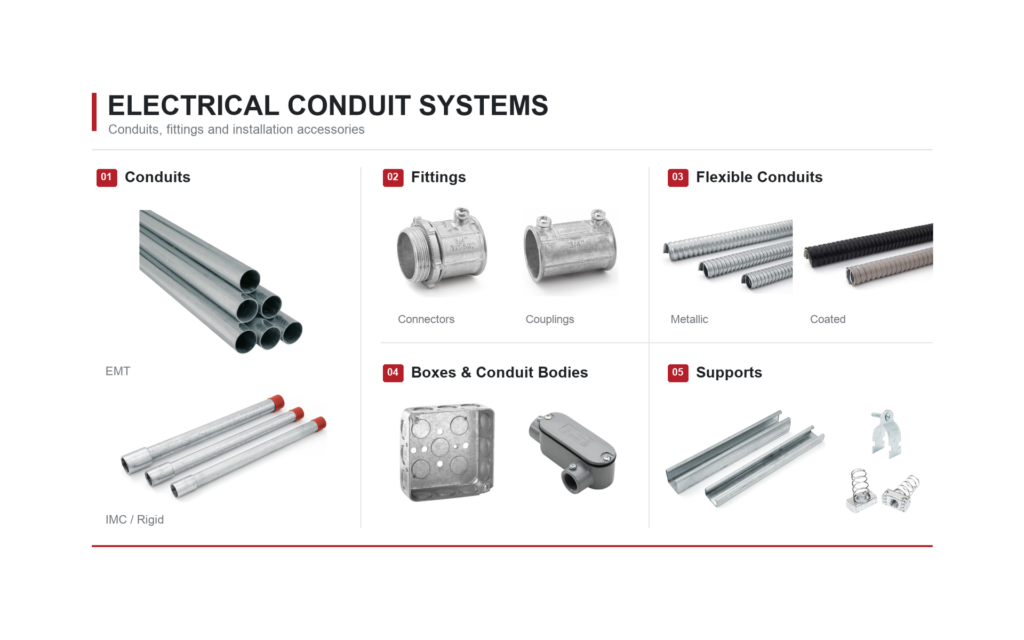
Electrical conduits and their accessories form part of that network. At Velkor, our product range focuses on these related families: metal conduits, fittings, flexible conduits, electrical boxes, and support products. Understanding how they fit together is a useful starting point for buyers considering this category.
Electrical conduit products work together as a system: conduits provide the wiring pathway, fittings make connections, boxes provide connection and access points, and supports hold the installation in place. For distributors considering this range, the practical starting point is a selection of compatible products suited to their customers and local market.
See how the parts connect
EMT connects to a straight-through conduit body; flexible metal conduit continues from its opposite hub.
1 EMT · 2 Coupling · 3 EMT connector · 4 Conduit body · 5 FMC connector · 6 Flexible conduit
One conduit body, two conduit types
A coupling joins the EMT lengths. Separate EMT and FMC connectors terminate the two conduit types at opposite hubs of the conduit body.
Illustrative arrangement, not a scale or installation drawing. Use fittings compatible with the body’s hubs, conduit types and application. Conductors and supports are omitted. On a small screen, swipe the drawing sideways to see the full route.
A conduit is a tube through which electrical conductors are routed. It provides a defined pathway and helps protect the wiring inside.
Our core metal conduit categories include Electrical Metallic Tubing (EMT), Intermediate Metal Conduit (IMC), and Rigid Metal Conduit (RMC).
EMT is a thin-wall metallic tubing system. Its tube ends are normally unthreaded, and connections are made using fittings such as set-screw or compression connectors and couplings.
IMC and RMC are separate conduit types commonly associated with threaded connections. They should be treated as distinct product categories when selecting or ordering.
For a new buyer, the first step is to identify which conduit system their customers use. Detailed dimensions, wall thicknesses, finishes, and certification requirements can then be discussed within that product family.
Conduit lengths are only part of an installation. Fittings connect them to one another and to boxes or equipment.
Two names are especially useful to learn:
Other accessories include elbows, locknuts, bushings, and offset connectors. Each serves a particular connection or installation purpose.
Within our fittings range, materials include steel, malleable iron, zinc alloy, and aluminum, depending on the product. Connection designs also vary: an EMT set-screw fitting and a threaded rigid conduit fitting belong to different connection systems.
For purchasing, a fitting’s appearance or nominal size alone is not enough to establish compatibility. The conduit type and connection design also matter.
Alongside straight metal tubing, our portfolio includes flexible conduit and matching connectors.
This category covers several constructions, including uncoated flexible metallic conduit, coated metallic conduit, and liquid-tight flexible conduit products. Buyers may encounter these when a wiring route calls for a flexible connection.
It helps to view the conduit and its end fittings together. A flexible conduit needs connectors intended for its particular construction and application.
The outer appearance can also be misleading. A coated flexible conduit should not automatically be assumed to have every performance characteristic associated with another coated product. Environmental suitability and any required ratings belong to the specific product and assembled connection.
For an overview, the key point is simple: flexible conduit is its own product family, with several options and corresponding accessories.
A conduit system also needs places where wiring can enter, connect, branch, or be accessed.
Our range includes electrical boxes, covers, and conduit bodies. These products help complete the installation around the conduit pathway.
For example, a conduit may terminate at an electrical box through a connector. A suitable cover completes the box assembly, while a conduit body can provide access at a particular point along the route.
Box dimensions, entry arrangements, cover styles, and intended applications vary. Introducing this category alongside conduit and fittings helps buyers understand the connections between products.
The pathway also needs to be held in position.
Strut channel, conduit straps, clamps, and related support accessories make up another part of our portfolio. They provide the supporting and fixing components around the conduit installation.
A simple product grouping might therefore include EMT tubing, compatible couplings and connectors, boxes and covers, and the appropriate fixing accessories. Seeing these items together makes the category easier to understand than viewing each as an isolated catalog entry.
For a distributor already supplying cables, electrical equipment, hardware, or construction materials, conduit products may be worth evaluating alongside the existing range.
Start with your customers’ purchasing needs. Do they already buy conduit? Which types do they use? Are they also asking for connectors, boxes, or supports that you do not currently carry?
Those answers can guide a focused initial selection. Local requirements, compatible sizes, and relevant product documentation should shape that selection before expanding the range.
At Velkor, we bring these related product families together to support that discussion. Tell us which market you serve and what your customers already purchase, and we can explore which conduit products and accessories may fit your business.
Let's build it together.
REQUEST A QUOTE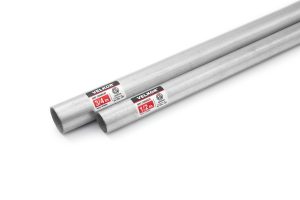 Electrical Metallic Tubing
Velkor manufactures Electrical Metallic Tubing (EMT) for commercial, industrial, and residential electrical installations. Every conduit is produced from premium low-carbon steel, delivering smooth bending performance, dimensional consistency, and dependable installation efficiency. Whether you need a cost-effective standard solution or maximum corrosion protection for demanding environments, Velkor offers the right zinc coating option for your project.
Electrical Metallic Tubing
Velkor manufactures Electrical Metallic Tubing (EMT) for commercial, industrial, and residential electrical installations. Every conduit is produced from premium low-carbon steel, delivering smooth bending performance, dimensional consistency, and dependable installation efficiency. Whether you need a cost-effective standard solution or maximum corrosion protection for demanding environments, Velkor offers the right zinc coating option for your project.
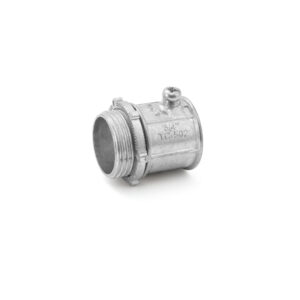 EMT Connector – Set Screw Type – Zinc Die Cast
Velkor set-screw EMT connectors are die-cast from virgin zinc alloy rather than lower-grade recycled material. Maintaining a controlled alloy composition helps reduce brittleness and the risk of cracking, giving the fitting greater toughness during installation, handling and transport.
EMT Connector – Set Screw Type – Zinc Die Cast
Velkor set-screw EMT connectors are die-cast from virgin zinc alloy rather than lower-grade recycled material. Maintaining a controlled alloy composition helps reduce brittleness and the risk of cracking, giving the fitting greater toughness during installation, handling and transport.
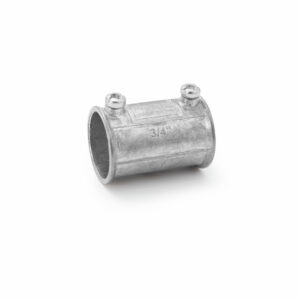 EMT Coupling – Set Screw Type – Zinc Die Cast
Velkor zinc die-cast set-screw EMT couplings join two lengths of EMT in a straight run. Each conduit end is secured independently by its own set screw, while the one-piece zinc alloy body supports consistent dimensions and straightforward installation.
EMT Coupling – Set Screw Type – Zinc Die Cast
Velkor zinc die-cast set-screw EMT couplings join two lengths of EMT in a straight run. Each conduit end is secured independently by its own set screw, while the one-piece zinc alloy body supports consistent dimensions and straightforward installation.
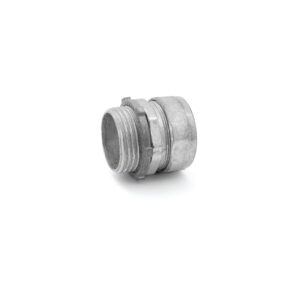 EMT Connector – Compression Type – Zinc Die Cast
This zinc die-cast compression connector terminates EMT conduit at an electrical box, cabinet, or enclosure. Its compression nut applies circumferential clamping around the conduit for controlled alignment, while the one-piece zinc alloy body offers dimensional consistency and a clean installation profile.
EMT Connector – Compression Type – Zinc Die Cast
This zinc die-cast compression connector terminates EMT conduit at an electrical box, cabinet, or enclosure. Its compression nut applies circumferential clamping around the conduit for controlled alignment, while the one-piece zinc alloy body offers dimensional consistency and a clean installation profile.
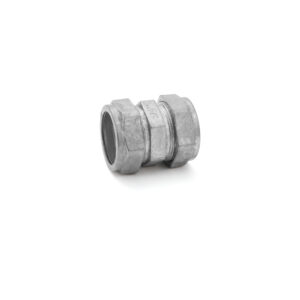 EMT Coupling – Compression Type – Zinc Die Cast
Velkor zinc die-cast compression EMT couplings join two lengths of EMT using independently tightened compression nuts. The compression mechanism grips around each conduit end to support alignment without exposed set screws, while the zinc die-cast body provides a clean, compact profile.
EMT Coupling – Compression Type – Zinc Die Cast
Velkor zinc die-cast compression EMT couplings join two lengths of EMT using independently tightened compression nuts. The compression mechanism grips around each conduit end to support alignment without exposed set screws, while the zinc die-cast body provides a clean, compact profile.
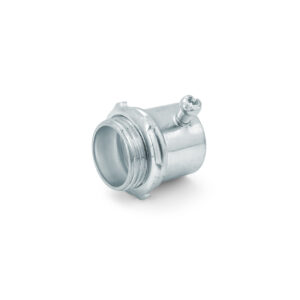 EMT Connector – Set Screw Type – Steel
Designed to connect EMT conduit securely to electrical boxes and enclosures through knockout openings. Manufactured from durable steel with a zinc-plated finish for corrosion protection. The set-screw design allows quick installation and provides a secure connection in dry locations.
EMT Connector – Set Screw Type – Steel
Designed to connect EMT conduit securely to electrical boxes and enclosures through knockout openings. Manufactured from durable steel with a zinc-plated finish for corrosion protection. The set-screw design allows quick installation and provides a secure connection in dry locations.
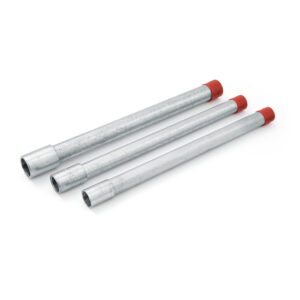 Intermediate Metal Conduit
Velkor Intermediate Metal Conduit (IMC) provides greater wall strength and mechanical protection than EMT while remaining lighter than conventional rigid metal conduit. Three product configurations allow buyers to select the appropriate wall thickness, zinc coating and standard compliance for their market, project and budget.
Rigid Metal Conduit – Hot-Dip Galvanized Steel
Velkor Rigid Metal Conduit is a heavy-wall steel raceway for installations that require greater mechanical protection than lighter metallic conduit systems. Each cataloged 3050 mm length is threaded for use with a rigid conduit coupling and supplied-end protection should be confirmed with the order specification.
Intermediate Metal Conduit
Velkor Intermediate Metal Conduit (IMC) provides greater wall strength and mechanical protection than EMT while remaining lighter than conventional rigid metal conduit. Three product configurations allow buyers to select the appropriate wall thickness, zinc coating and standard compliance for their market, project and budget.
Rigid Metal Conduit – Hot-Dip Galvanized Steel
Velkor Rigid Metal Conduit is a heavy-wall steel raceway for installations that require greater mechanical protection than lighter metallic conduit systems. Each cataloged 3050 mm length is threaded for use with a rigid conduit coupling and supplied-end protection should be confirmed with the order specification.
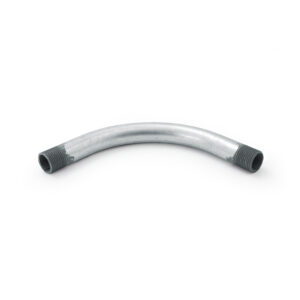 RIGID 90 Degree Radius Elbow – Galvanized Steel
Velkor RIGID 90 degree radius elbows redirect threaded RIGID or IMC conduit runs through a right-angle bend. The galvanized steel body provides a formed metal pathway for changing direction within the threaded raceway system.
RIGID 90 Degree Radius Elbow – Galvanized Steel
Velkor RIGID 90 degree radius elbows redirect threaded RIGID or IMC conduit runs through a right-angle bend. The galvanized steel body provides a formed metal pathway for changing direction within the threaded raceway system.
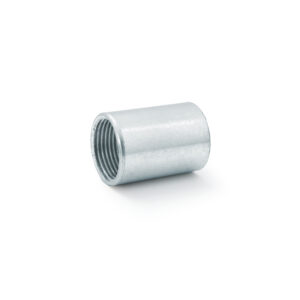 RIGID Coupling – Tubular Threaded – Galvanized Steel
Velkor tubular threaded RIGID couplings join two threaded RMC or IMC lengths to maintain raceway continuity. The galvanized steel body provides a direct threaded connection.
RIGID Coupling – Tubular Threaded – Galvanized Steel
Velkor tubular threaded RIGID couplings join two threaded RMC or IMC lengths to maintain raceway continuity. The galvanized steel body provides a direct threaded connection.
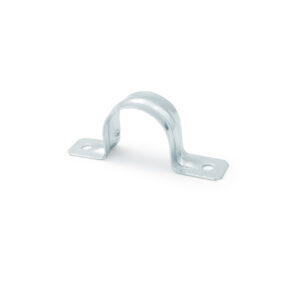 RIGID Strap – Two Hole – Galvanized Steel
Velkor two-hole RIGID straps support RIGID or IMC conduit against a mounting surface. A fastening point on each side of the conduit gives installers a balanced two-point attachment across the strap.
RIGID Strap – Two Hole – Galvanized Steel
Velkor two-hole RIGID straps support RIGID or IMC conduit against a mounting surface. A fastening point on each side of the conduit gives installers a balanced two-point attachment across the strap.
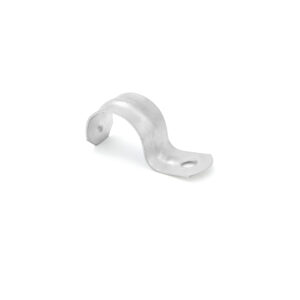 Rigid One-Hole Strap – Galvanized Steel
Velkor rigid one-hole straps secure RMC or IMC to a mounting surface with one fastening point. The compact galvanized-steel profile is useful where installers need direct surface support without the wider footprint of a two-hole strap.
Rigid One-Hole Strap – Galvanized Steel
Velkor rigid one-hole straps secure RMC or IMC to a mounting surface with one fastening point. The compact galvanized-steel profile is useful where installers need direct surface support without the wider footprint of a two-hole strap.
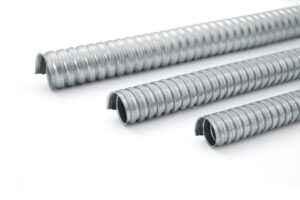 Flexible Metal Conduit – Greenfield
Velkor Greenfield Flexible Metal Conduit provides flexible and reliable cable routing around equipment, machinery, and tight installation spaces. Its galvanized steel construction forms a continuous flexible raceway, making it suitable for applications where rigid conduit is difficult to route or install. Greenfield flexible conduit is also commonly referred to as American Standard Steel Flexible Conduit. If you are looking for a square-locked construction with greater flexibility, please visit our Square-Locked Flexible Conduit (Ultra Flex) page.
Flexible Metal Conduit – Greenfield
Velkor Greenfield Flexible Metal Conduit provides flexible and reliable cable routing around equipment, machinery, and tight installation spaces. Its galvanized steel construction forms a continuous flexible raceway, making it suitable for applications where rigid conduit is difficult to route or install. Greenfield flexible conduit is also commonly referred to as American Standard Steel Flexible Conduit. If you are looking for a square-locked construction with greater flexibility, please visit our Square-Locked Flexible Conduit (Ultra Flex) page.
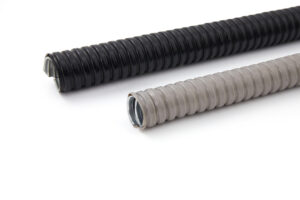 PVC-Coated Flexible Metal Conduit – Square Lock
Velkor PVC-coated flexible metal conduit combines a square-lock metallic core with an external PVC covering for flexible cable routing and added surface protection. Its covered construction provides a practical option where a flexible metal raceway with a smoother outer surface is preferred.
PVC-Coated Flexible Metal Conduit – Square Lock
Velkor PVC-coated flexible metal conduit combines a square-lock metallic core with an external PVC covering for flexible cable routing and added surface protection. Its covered construction provides a practical option where a flexible metal raceway with a smoother outer surface is preferred.
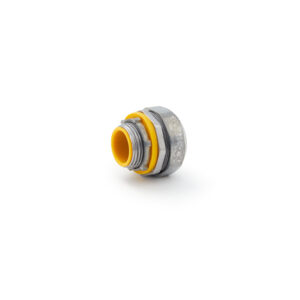 Liquid-Tight Straight Connector – Zinc Die Cast
Velkor liquid-tight straight connectors terminate flexible conduit at a box cabinet or enclosure in a direct-line arrangement. The zinc die-cast body provides a compact fitting profile while the straight entry supports orderly routing where no direction change is needed.
Liquid-Tight Straight Connector – Zinc Die Cast
Velkor liquid-tight straight connectors terminate flexible conduit at a box cabinet or enclosure in a direct-line arrangement. The zinc die-cast body provides a compact fitting profile while the straight entry supports orderly routing where no direction change is needed.
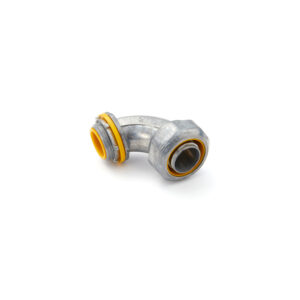 Liquid-Tight 90° Connector – Zinc Die Cast
Velkor liquid-tight 90° connectors provide a right-angle transition from flexible conduit into a box, cabinet, or enclosure. The zinc die-cast body helps manage routing where straight entry is restricted and a compact change of direction is required.
Liquid-Tight 90° Connector – Zinc Die Cast
Velkor liquid-tight 90° connectors provide a right-angle transition from flexible conduit into a box, cabinet, or enclosure. The zinc die-cast body helps manage routing where straight entry is restricted and a compact change of direction is required.
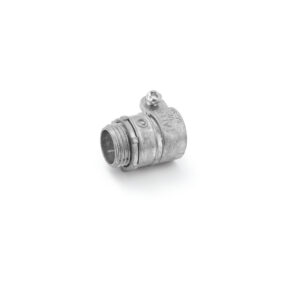 BX/FMC Straight Squeeze Connector – Zinc Die Cast
Velkor BX/FMC straight squeeze connectors join flexible metal conduit to an enclosure through a direct entry. The squeeze-style connection secures the conduit while the zinc die-cast body provides a compact fitting for straightforward routing layouts.
BX/FMC Straight Squeeze Connector – Zinc Die Cast
Velkor BX/FMC straight squeeze connectors join flexible metal conduit to an enclosure through a direct entry. The squeeze-style connection secures the conduit while the zinc die-cast body provides a compact fitting for straightforward routing layouts.
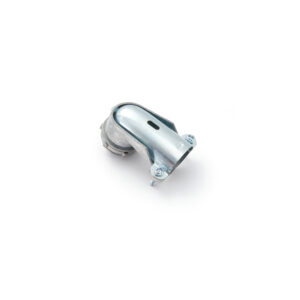 BX/FMC 90° Squeeze Connector – Zinc Die Cast
Velkor BX/FMC 90° squeeze connectors provide a right-angle entry from flexible metal conduit into a box or enclosure. The squeeze connection supports secure conduit engagement while the zinc die-cast elbow helps organize installations with limited straight-line clearance.
BX/FMC 90° Squeeze Connector – Zinc Die Cast
Velkor BX/FMC 90° squeeze connectors provide a right-angle entry from flexible metal conduit into a box or enclosure. The squeeze connection supports secure conduit engagement while the zinc die-cast elbow helps organize installations with limited straight-line clearance.
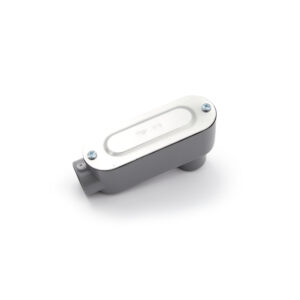 RIGID Threaded Conduit Bodies
Velkor RIGID threaded conduit bodies provide accessible direction changes and pull points in threaded rigid conduit runs. Available in C, LB, LL, LR, and T configurations, each body is supplied with a cover and gasket.
RIGID Threaded Conduit Bodies
Velkor RIGID threaded conduit bodies provide accessible direction changes and pull points in threaded rigid conduit runs. Available in C, LB, LL, LR, and T configurations, each body is supplied with a cover and gasket.
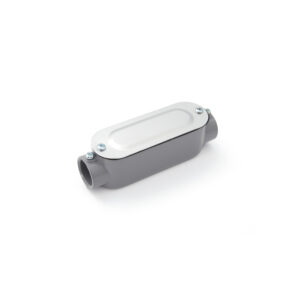 EMT Set-Screw Conduit Bodies
Velkor EMT set-screw conduit bodies provide accessible direction changes and pull points in electrical metallic tubing runs. Available in C, LB, LL, LR, and T configurations, each body is supplied with a cover and gasket.
EMT Set-Screw Conduit Bodies
Velkor EMT set-screw conduit bodies provide accessible direction changes and pull points in electrical metallic tubing runs. Available in C, LB, LL, LR, and T configurations, each body is supplied with a cover and gasket.
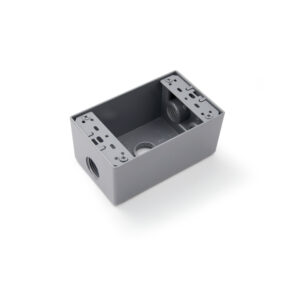 Single-Gang Weatherproof Boxes
Velkor single-gang weatherproof boxes provide cast aluminum wiring space for surface-mounted devices and conduit terminations. Hole-pattern variants are organized by opening arrangement, including side-opening models identified by an X suffix.
Single-Gang Weatherproof Boxes
Velkor single-gang weatherproof boxes provide cast aluminum wiring space for surface-mounted devices and conduit terminations. Hole-pattern variants are organized by opening arrangement, including side-opening models identified by an X suffix.
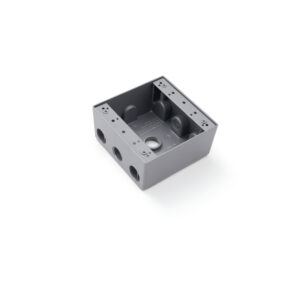 Double Gang Weatherproof Boxes
Velkor double gang weatherproof boxes provide cast aluminum wiring space for multi-device surface installations and conduit entry arrangements. The grouped catalog structure separates standard and side-opening hole patterns, with X suffixes reserved for side-opening models.
Double Gang Weatherproof Boxes
Velkor double gang weatherproof boxes provide cast aluminum wiring space for multi-device surface installations and conduit entry arrangements. The grouped catalog structure separates standard and side-opening hole patterns, with X suffixes reserved for side-opening models.
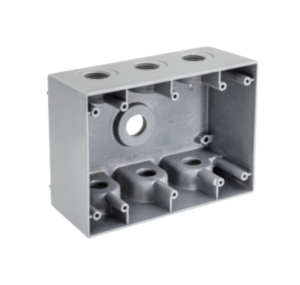 Triple-Gang Weatherproof Boxes
Velkor Triple-Gang Weatherproof Boxes provide three device positions in a 2-inch-deep aluminum body.
Triple-Gang Weatherproof Boxes
Velkor Triple-Gang Weatherproof Boxes provide three device positions in a 2-inch-deep aluminum body.
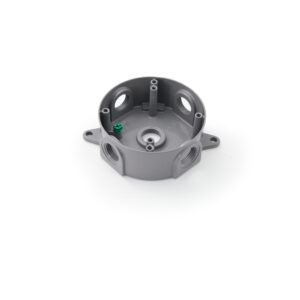 4-Inch Round Weatherproof Boxes
Velkor 4-Inch Round Weatherproof Boxes provide a round wiring enclosure with four side entries and one bottom entry.
4-Inch Round Weatherproof Boxes
Velkor 4-Inch Round Weatherproof Boxes provide a round wiring enclosure with four side entries and one bottom entry.
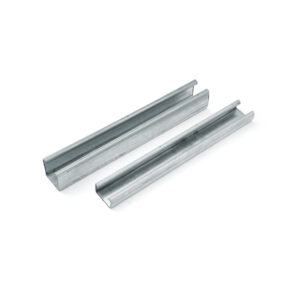 41 × 41 mm Strut Channel – Plain and Slotted
Velkor 41 × 41 mm strut channel is available in plain and slotted 3-meter configurations. A standard 2.5 mm thickness supports general framing and support-system selection, while alternative thicknesses and four finish codes are available for project-specific ordering.
41 × 41 mm Strut Channel – Plain and Slotted
Velkor 41 × 41 mm strut channel is available in plain and slotted 3-meter configurations. A standard 2.5 mm thickness supports general framing and support-system selection, while alternative thicknesses and four finish codes are available for project-specific ordering.
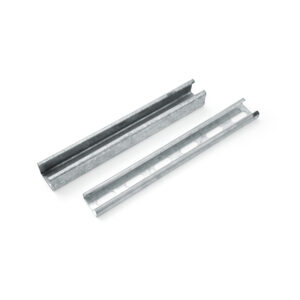 41 × 21 mm Strut Channel – Plain and Slotted
Velkor 41 × 21 mm strut channel is available in plain and slotted 3-meter configurations. The lower-profile section uses a standard 2.5 mm thickness, while other thicknesses and four finish options are available for project-specific ordering.
41 × 21 mm Strut Channel – Plain and Slotted
Velkor 41 × 21 mm strut channel is available in plain and slotted 3-meter configurations. The lower-profile section uses a standard 2.5 mm thickness, while other thicknesses and four finish options are available for project-specific ordering.
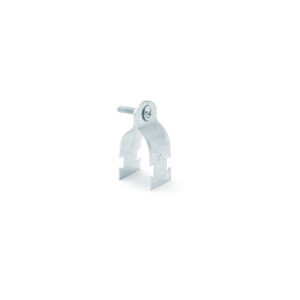 Strut Clamps
Velkor strut clamps cover catalog series VK2101–VK2110 and trade sizes from 1/2 in through 4 in. The range is organized under the Strut Channel System; model-to-size mapping and product-specific construction details require confirmation before publication or ordering.
Strut Clamps
Velkor strut clamps cover catalog series VK2101–VK2110 and trade sizes from 1/2 in through 4 in. The range is organized under the Strut Channel System; model-to-size mapping and product-specific construction details require confirmation before publication or ordering.
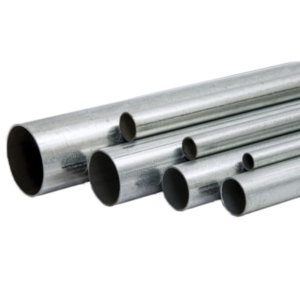 Metric EMT Steel Conduit – Unthreaded
Velkor Metric EMT Steel Conduit is an unthreaded metallic raceway for routing and protecting electrical conductors. Six metric sizes are supplied in 3 m lengths, with confirmed outside-diameter limits, wall thickness, piece weight and bundle quantity shown for each catalog number.
Metric EMT Steel Conduit – Unthreaded
Velkor Metric EMT Steel Conduit is an unthreaded metallic raceway for routing and protecting electrical conductors. Six metric sizes are supplied in 3 m lengths, with confirmed outside-diameter limits, wall thickness, piece weight and bundle quantity shown for each catalog number.
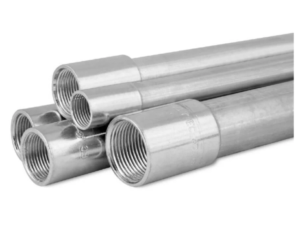 Metric RMC Steel Conduit – Hot-Dip Galvanized
Velkor Metric RMC Steel Conduit is a heavier-wall metallic raceway with threaded ends for compatible rigid-conduit connections. The supplied table covers 20–110 mm sizes in 3 m lengths and records diameter limits, wall thickness, piece weight and package quantity for each model.
Metric EMT Connector – Set-Screw Type – Zinc
Velkor Zinc Set-Screw EMT Connectors terminate unthreaded metric conduit at junction boxes, cabinets and panels. The conduit-side screw secures the tube, while the threaded enclosure end forms the box entry. Sizes run from 16 to 110 mm. Complies with IEC 61386-1 and IEC 61386-21.
Metric EMT Coupling – Set-Screw Type – Zinc
Velkor Zinc Set-Screw EMT Couplings join two matching conduit lengths in a straight run. Separate screws secure the tube ends, providing accessible fastening points on both sides of the joint. The range covers 16–110 mm metric EMT. Complies with IEC 61386-1 and IEC 61386-21.
Metric RMC Steel Conduit – Hot-Dip Galvanized
Velkor Metric RMC Steel Conduit is a heavier-wall metallic raceway with threaded ends for compatible rigid-conduit connections. The supplied table covers 20–110 mm sizes in 3 m lengths and records diameter limits, wall thickness, piece weight and package quantity for each model.
Metric EMT Connector – Set-Screw Type – Zinc
Velkor Zinc Set-Screw EMT Connectors terminate unthreaded metric conduit at junction boxes, cabinets and panels. The conduit-side screw secures the tube, while the threaded enclosure end forms the box entry. Sizes run from 16 to 110 mm. Complies with IEC 61386-1 and IEC 61386-21.
Metric EMT Coupling – Set-Screw Type – Zinc
Velkor Zinc Set-Screw EMT Couplings join two matching conduit lengths in a straight run. Separate screws secure the tube ends, providing accessible fastening points on both sides of the joint. The range covers 16–110 mm metric EMT. Complies with IEC 61386-1 and IEC 61386-21.
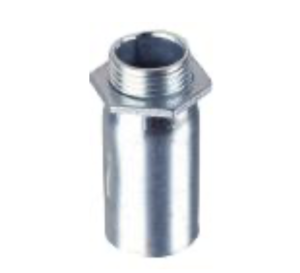 Metric EMT Connector – Autofijación Type – Steel
Velkor Autofijación Steel EMT Connectors provide the transition from matching metric conduit to a box or cabinet. Five sizes cover 20, 25, 32, 40 and 50 mm conduit for installations specifying the Autofijación fitting format. Complies with IEC 61386-1 and IEC 61386-21.
Metric EMT Connector – Autofijación Type – Steel
Velkor Autofijación Steel EMT Connectors provide the transition from matching metric conduit to a box or cabinet. Five sizes cover 20, 25, 32, 40 and 50 mm conduit for installations specifying the Autofijación fitting format. Complies with IEC 61386-1 and IEC 61386-21.
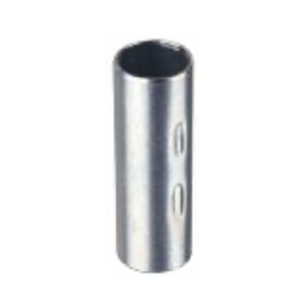 Metric EMT Coupling – Autofijación Type – Steel
Velkor Autofijación Steel EMT Couplings connect two matching conduit lengths in a straight route. The series covers 20–50 mm metric EMT and is intended for layouts specifying Autofijación fittings. Complies with IEC 61386-1 and IEC 61386-21.
Metric EMT Coupling – Autofijación Type – Steel
Velkor Autofijación Steel EMT Couplings connect two matching conduit lengths in a straight route. The series covers 20–50 mm metric EMT and is intended for layouts specifying Autofijación fittings. Complies with IEC 61386-1 and IEC 61386-21.