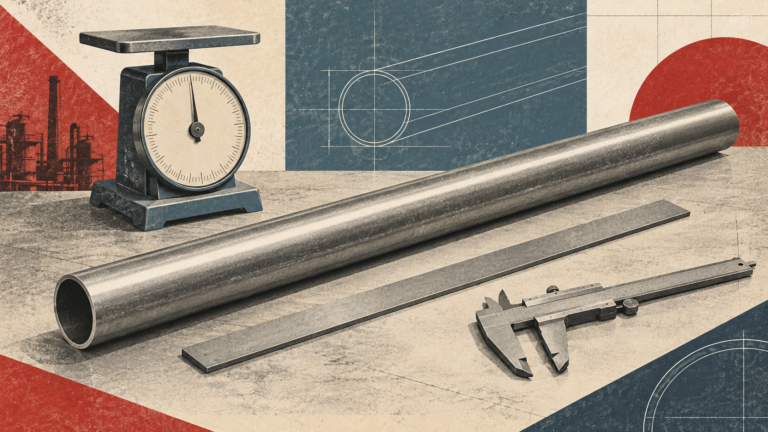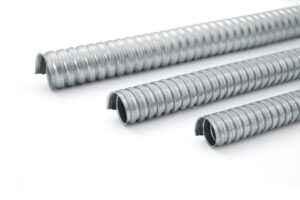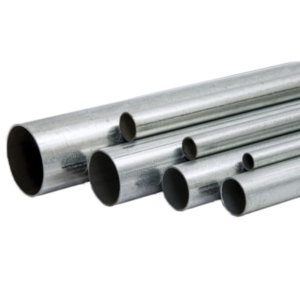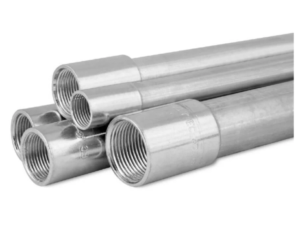
Two galvanized steel tubes may look similar but carry very different amounts of zinc. For buyers, that difference matters because the coating helps protect the steel underneath from corrosion.
More zinc generally provides a larger reserve against corrosion under comparable conditions. However, coating mass, surface coverage and the galvanizing process must be considered together. Comparing 30 g/m², 275 g/m² and galvanizing after tube fabrication starts with understanding what each description actually means.
The pre-galvanized conduit discussed here is not offered as UL 797-compliant EMT. For projects where pre-galvanized conduit is permitted and suitable, Velkor recommends 275 g/m² over very light coatings as a practical balance of purchase cost and corrosion protection. More zinc provides a larger protective reserve under comparable conditions, but sound manufacturing, weld protection and the required product listing still matter. For severe exposure, evaluate after-fabrication hot-dip galvanizing and any additional protection required for the complete installation.
PLAN YOUR SPECIFICATION
Which coating should you consider?
Choose the exposure, project requirement and budget to see Velkor’s starting recommendation. This guide compares coating options; it does not approve an installation or establish product compliance.
Complete all three choices to see a recommendation.
Read the selection guide without using the tool
- Listing required: The pre-galvanized conduit discussed here is not offered as UL 797-compliant EMT. For projects requiring a listed product, we recommend our hot-dip galvanized EMT conduit. Velkor offers an ETL Listed EMT option evaluated to UL 797. Confirm that the offered model and size are covered by the current listing and accepted by the project specification. ETL Listed to UL 797 does not mean UL Listed.
- Severe exposure: evaluate after-fabrication hot-dip galvanizing, actual coating coverage and any required supplementary protection.
- Soil contact: confirm whether EMT is permitted and what supplementary protection the complete system requires. A hot-dip description alone does not approve burial.
- Ordinary suitable locations: Z275 is our preferred pre-galvanized option.
- Strict budget, dry indoors, with no listing requirement already verified: a light 30 g/m² coating may be considered only after project-specific acceptance. It offers less zinc reserve; Z275 remains our preference.
What does a thicker zinc coating improve?
Zinc coating thickness mainly affects corrosion protection. It does not replace steel wall thickness, correct a poor weld or establish that a conduit meets the required product standard.
As the zinc coating corrodes, its protective reserve is gradually consumed. With comparable coatings and exposure, more zinc generally means protection can last longer. Moisture, salt and other environmental conditions still affect the result.[1][6]
That is why zinc thickness is one part of tube quality, rather than a complete quality rating. A buyer should assess steel properties, wall thickness, dimensional consistency, weld integrity and the finished tube's required mechanical performance separately. At Velkor, we treat these as questions of manufacturing control: a hot-dip coating does not, by itself, demonstrate a better weld or better resistance to mechanical loads. Ask for the relevant finished-product inspection and test results, not only a coating description.
30 g/m² versus 275 g/m²: compare the same measurement
For this calculation, both figures refer to the total zinc coating mass on the two faces of the original steel strip. They do not describe the coating on one surface alone. The 30 g/m² figure is an illustrative input here; the coating mass of a particular supplied batch must be checked against its material records.
Using a zinc density of 7,140 kg/m³, we can illustrate their difference:[1]
| Coating description | Total coating mass, both strip faces | Approximate thickness per face, assuming an equal split |
|---|---|---|
| Light pre-galvanized coating | 30 g/m² | 2.1 μm |
| High-zinc pre-galvanized coating | 275 g/m² | 19.3 μm |
These are theoretical conversions, not measured thicknesses or guaranteed local minimums on a finished tube. Actual coating distribution can vary.
Z275 is a steel-sheet coating designation. Under the ASTM A653M basis explained by GalvInfo, 275 g/m² is the minimum triple-spot average for both sides combined, with separate sampling requirements.[1]
On the same stated basis, 275 g/m² contains about 9.2 times as much zinc as 30 g/m². This is a substantial difference in protective reserve, but it is not a promise of 9.2 times the finished tube's service life.
For a buyer choosing between otherwise comparable pre-galvanized tubes, the higher coating mass offers a stronger basis for corrosion protection. The additional zinc still needs to be supported by coating records and suitable protection at the welded area.
What we see when measuring finished conduit
At Velkor, we recorded 30 measurements in total during our finished-conduit coating checks. The results below are our factory experience, reported under the samples’ 30 g/m² and 275 g/m² labels:
| Sample label | Lowest recorded reading | Highest recorded reading | Mean reading |
|---|---|---|---|
| 30 g/m² light pre-galvanized | 7.0 μm | 9.5 μm | 8.5 μm |
| 275 g/m² high-zinc pre-galvanized | 30.9 μm | 36.3 μm | 33.3 μm |
These are observed readings from those checks, not guaranteed ranges for every batch or proof of compliance with a particular inspection standard. The lowest recorded reading is the lowest among the measured locations; it does not establish the thinnest point anywhere on the tube.
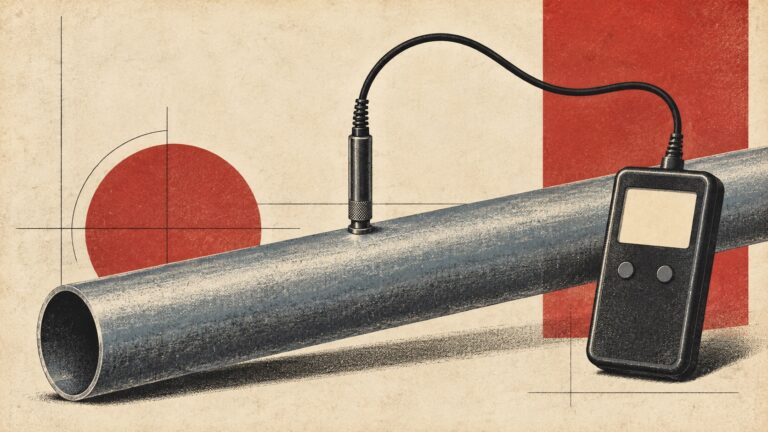
The light-coating readings are higher than the theoretical 2.1 μm per face calculated from 30 g/m². However, the calculation describes an assumed average on the original strip, while the gauge measures a local point on a finished curved tube. Tube curvature, surface roughness and the probe setup can influence readings; actual coating distribution can also vary.[7] We have not established how much of this difference comes from measurement effects or whether the stated strip coating mass matches the measured samples.
Therefore, a higher gauge reading alone does not establish the original strip's coating mass. Compare ordinary tube-body readings separately from treated welds and cut ends, verify the instrument on suitable uncoated material of matching geometry, and check the batch's coating records. For the measurement details, see our guide to why zinc coating thickness readings vary on steel conduit.
How does galvanizing after tube fabrication differ?
The useful distinction is when the zinc is applied.
Pre-galvanized tubing is formed from steel strip that has already been coated. That strip may itself have been hot-dip galvanized on a continuous line. Therefore, “pre-galvanized” does not automatically mean electro-galvanized.[2]
With hot-dip galvanizing after fabrication, the tube is formed and welded before it is immersed in molten zinc. With proper cleaning and provision for zinc flow, venting and drainage, this process can coat accessible internal and external surfaces.[4][5]
| Option | Main advantage or limitation | What buyers should verify |
|---|---|---|
| 30 g/m² pre-galvanized | A relatively small zinc reserve in this comparison | Suitability for the exposure, coating evidence and weld protection |
| 275 g/m² high-zinc pre-galvanized | More zinc on the original strip, while still requiring attention to fabrication areas | Coating designation, actual coating distribution and weld treatment |
| Hot-dip galvanized after fabrication | Coating is applied after forming and welding | Specified and measured coating thickness, inside coverage and finished surface quality |
“Hot-dip galvanized” is a process description, not one fixed thickness. It is not enough to rank an unspecified hot-dip tube against Z275. Ask for the actual coating requirement and inspection results on the offered product.[4]
Checking coating coverage and the thinnest areas
For this comparison, we treat after-fabrication hot-dip galvanizing as one process category. The coating requirement still needs to be specified: the process name is not a single thickness grade. ASTM A123/A123M, for example, has coating thickness requirements linked to material category and steel thickness; this does not establish which specification applies to a particular EMT product.[8]
Average thickness does not tell the whole story. ASTM A239 describes a copper sulfate solution method for locating the thinnest spot in a zinc coating. Its published scope covers articles coated after forming, and its examples include electrical metallic tubing and rigid conduit pipe. It excludes sheet steel from continuous hot-dip or electrocoating lines, so it should not automatically be applied to the pre-galvanized products in this comparison.[9]
This is a destructive test, not a direct micrometre reading or one universal minimum-thickness limit for every conduit. The relevant product specification and purchase requirements must establish the applicable acceptance criteria. Different coating processes can produce different test endpoints, and ASTM explicitly says the results should not be used to predict coating service life.[9] Our 30 gauge measurements above are not reported as an ASTM A239 test or evidence of compliance with it.
A locally thinner coating may consume its protective reserve sooner under comparable exposure. However, a small damaged area does not automatically make the entire conduit unusable: nearby zinc can also provide sacrificial protection to exposed steel. The practical concern is adequate coating thickness and coverage, with defects assessed under the applicable requirements—not the assumption that one low reading means the conduit can no longer protect its wiring.[8]
The weld and cut ends also matter
Welding can disturb the original coating, so a pre-galvanized tube needs attention at the welded area. SSAB recommends protecting the weld area after fusion welding of galvanized steel.[3]
In the pre-galvanized process we have discussed at Velkor, we apply protective spray treatment to the inside and outside welded area, and to cut ends. This treatment should be evaluated separately from the original coating on the tube body.
A thicker reading over a treated area should not automatically be interpreted as more original zinc on the tube body. Inspect the treated area separately rather than using it to represent the original strip coating.
Likewise, galvanizing after fabrication does not make every later cut or fabrication step irrelevant. Ask what happens after galvanizing and how any newly exposed areas are protected.
Why Velkor recommends Z275 over very light pre-galvanized coatings
When a pre-galvanized product is suitable for the project, our recommendation is to choose the 275 g/m² option over a very light coating such as the 30 g/m² example. We see it as a practical balance between purchase cost and corrosion protection, rather than pursuing the lowest initial price alone.
The reason is straightforward: under comparable conditions, more zinc gives the steel a larger protective reserve. In our offering, Z275 is the option we recommend for buyers seeking that reserve without moving to after-fabrication hot-dip galvanizing. This is our purchasing recommendation, not a claim that Z275 is the highest coating designation available or the best choice for every installation. Higher strip-coating designations also exist.[1][3]
A low quotation is difficult to assess unless it states the coating mass, wall thickness and manufacturing requirements. Reducing the zinc requirement can reduce protective reserve even if two tubes look similar. Buyers should compare these specifications before accepting a saving; we do not treat a low price alone as evidence of poor quality.
We would not assign a universal three- or four-year life to a light coating, or promise a fixed life for Z275. Moisture, salts, coating damage and installation conditions can change corrosion rates substantially. Our preference for Z275 is based on having more protection available under comparable exposure, not on an unsupported service-life guarantee.[1][6]
Start with the required standard and installation conditions
For steel EMT, UL 797 is a relevant product standard. Its published scope permits several exterior corrosion-resistant coating types; it does not state that only after-fabrication hot-dip galvanizing can qualify.[10] Therefore, neither “pre-galvanized” nor “hot-dip galvanized” alone establishes compliance. This also does not prove that a particular pre-galvanized product meets UL 797.
The pre-galvanized conduit discussed here is not offered as UL 797-compliant EMT. The Velkor Z275 option discussed here is not offered as a UL Listed or CSA-certified product. For projects requiring a listed EMT product, we recommend our hot-dip galvanized EMT conduit: Velkor offers an ETL Listed option evaluated to UL 797. Confirm current listing coverage for the offered model and size and acceptance under the project specification. ETL Listed to UL 797 is distinct from UL Listed; a higher zinc mass is not a substitute for the required listing.
For more demanding exposure, after-fabrication hot-dip galvanizing is an option worth evaluating, with its actual coating coverage, specification and project price confirmed. Coastal salt exposure or contact with soil requires particular care: a hot-dip description alone does not establish suitability. Steel Tube Institute guidance notes that EMT in contact with soil generally requires supplementary corrosion protection and discusses additional protection in salt-exposed locations.[11] Check the applicable installation rules, product instructions, fittings and any required additional protection as a system.
For less aggressive environments where this product is permitted and suitable, Z275 remains our preferred pre-galvanized option in this comparison. The aim is dependable value: adequate corrosion protection together with sound manufacturing, appropriate mechanical performance and the compliance the project actually requires.
What should you specify when ordering?
Start with the installation environment, then make the coating requirement clear. A useful enquiry identifies:
- The conduit type, sizes and required product standard or listing.
- Whether galvanizing occurs before or after tube fabrication.
- Coating mass or thickness, including the surfaces covered and whether the value is a minimum or average.
- Protection of the inside surface, weld and cut ends.
- Inspection evidence for the offered material and finished product.
A coating description alone does not prove electrical-conduit compliance. When reviewing EMT conduit options, check the exact product specification and any required certification separately.
The practical choice is not simply the largest number on a quotation. Choose enough corrosion protection for the intended conditions, then verify where that protection exists on the finished tube. Steel wall thickness is a separate part of the assessment; see how wall thickness affects EMT conduit bending.
References
GalvInfo, Understanding Coating Weight Designations for Zinc-Based Coatings on Steel Sheet, Rev. 4.0.
https://www.galvinfo.com/wp-content/uploads/sites/8/2021/01/GalvInfoNote-1-1-Rev-4-0.pdfGalvInfo, Continuous Hot-Dip Galvanizing versus General (Batch) Galvanizing.
https://www.galvinfo.com/wp-content/uploads/sites/8/2017/05/GalvInfoNote_2_3.pdfSSAB, Hot-dip galvanized coating.
https://www.ssab.com/en-us/brands-and-products/steel-categories/coated-steel/hot-dip-galvanized-coatingAmerican Galvanizers Association, Batch / After-Fabrication Hot-Dip Galvanizing.
https://galvanizeit.org/corrosion/corrosion-protection/zinc-coatings/batch-hot-dip-galvanizingAmerican Galvanizers Association, Venting & Drainage.
https://galvanizeit.org/design-and-fabrication/design-considerations/venting-and-drainageInternational Zinc Association, Current Issues in Coating Mass Control.
https://www.galvinfo.com/wp-content/uploads/sites/8/2017/12/Zinc-Coating-Mass-Control-Current-Issues.pdfDeFelsko, Measuring Galvanizing Thickness.
https://www.defelsko.com/resources/galvanizing-thickness-measurementAmerican Galvanizers Association, ASTM A123/A123M; Coating Thickness; ASTM A123 and G90 Specifications.
https://galvanizeit.org/knowledgebase/article/astm-a123-a123mhttps://galvanizeit.org/specification-and-inspection/inspection-of-hdg/types-of-inspection/coating-thicknesshttps://galvanizeit.org/knowledgebase/article/astm-a123-and-g90-specificationsASTM International, ASTM A239-21, Standard Practice for Locating the Thinnest Spot in a Zinc (Galvanized) Coating on Iron or Steel Articles. Public Scope and Significance and Use.
https://store.astm.org/a0239-21.htmlUL Standards & Engagement, UL 797, Electrical Metallic Tubing — Steel, public Scope, section 1.1.
https://www.shopulstandards.com/ProductDetail.aspx?productId=UL797Steel Tube Institute, Steel Conduit Tech Talk: Corrosion Protection.
https://steeltubeinstitute.org/resources/steel-conduit-tech-talk-corrosion-protection/
Sources [1]–[6] read October 6, 2026; source [7] read September 21, 2026, with its retained text checked again October 8, 2026. Source [8] pages and source [9] public scope read October 8, 2026. Sources [10]–[11] read October 8, 2026. The full ASTM A239 procedure and full UL 797 test requirements were not accessed. The Velkor treatment example and finished-tube measurement results describe owner-reported experience; the references do not independently verify these observations or any Velkor product specification.