Home
Blog & Expertise
Product Guides


When new colleagues join Velkor, one question comes up often: what is the difference between ordinary PVC-coated flexible metal conduit and low-smoke, halogen-free conduit?
It is an understandable question. Both may be described as jacketed flexible metal conduit, but the jacket material and its performance requirements can be different. Then another question follows: if PVC contains chlorine, does that mean it cannot resist UV?
We also encounter low-smoke, halogen-free flexible conduit frequently in our work with Chilean customers. That experience makes these distinctions especially useful for our team. We wrote this guide for new colleagues, buyers and anyone entering the electrical-products industry who wants a clearer starting point.
For the jacketed flexible metal conduits discussed here, the metal core provides mechanical protection for wiring while allowing flexible routing. The outer jacket adds a barrier against moisture and contaminants.
With PVC-coated conduit, that outer material is polyvinyl chloride. With a halogen-free jacket, a different formulation is used. The core construction, dimensions, jacket formulation and fitting arrangement still need to be compared: changing one description does not make two products identical.
This is the starting point we want new colleagues to take away: identify the construction first, then discuss the performance of the particular version.
Chlorine is part of PVC's chemical composition. UV resistance describes how a material withstands ultraviolet exposure under specified conditions. The presence of chlorine does not, by itself, establish whether a conduit jacket passes a sunlight-resistance test.
A practical example is ANAMET's Type UA HD flexible metal conduit. Its manufacturer specifies an interlocked galvanized steel core with a UV-resistant PVC jacket. PVC and UV resistance therefore can coexist in a real product.
That does not make every PVC jacket suitable for the same outdoor exposure. For an outdoor connection, look for the actual product's sunlight-resistance information and temperature range. A halogen-free jacket also needs its own UV-performance information if it will be exposed to sunlight.
Nor should an accelerated weathering test be translated into a fixed outdoor lifetime. ANAMET's technical FAQ explains that such testing cannot precisely establish years of service in every real environment.
LSZH means low smoke, zero halogen; LSHF means low smoke, halogen-free. The key is that the description combines two requirements: low smoke generation under the relevant test conditions, and the applicable halogen-content or halogen-emission requirement.
PVC contains chlorine, so a PVC jacket cannot be described as halogen-free. But a halogen-free statement alone does not establish low-smoke performance. If a specification asks for both, both must be addressed.
Manufacturers distinguish these tests in their technical documentation. For example, Electri-Flex lists smoke-generation and flammability test references separately for its low-smoke, zero-halogen conduit range. Low smoke, flame retardancy and UV resistance are not interchangeable descriptions.
For someone new to this industry, it helps to read the words one at a time: “low smoke” concerns smoke performance; “halogen-free” concerns the relevant halogen requirement; “UV-resistant” concerns exposure to ultraviolet light. None of these labels should silently stand in for another.
Read the description
Four sample descriptions. Four separate questions. Compare what each one states—and what still needs checking.
These are educational examples, not Velkor product specifications or test results. “Not specified” means the description does not answer that question; it does not mean the product failed.
PVC coating identifies a material. It does not establish the jacket’s UV or low-smoke performance.
Material and UV performance are both described. Chlorine content does not prevent UV resistance.
This description names low-smoke and halogen-free properties. Outdoor performance is a separate question.
These two requirements can be combined. Neither one, on its own or together, establishes low-smoke performance.
For every example, liquidtight system performance remains a separate check: verify the conduit, compatible fittings and installation conditions.
Try three questions
Choose Yes or No. Each answer reveals the reason, and you can change your choice.
In our experience serving Chilean customers, low-smoke, halogen-free flexible conduit comes up frequently. When a new colleague sees this alongside ordinary PVC-coated conduit, the natural question is whether it is simply another name for the same product.
It is not just a naming difference. The jacket requirements need to be understood. If the requested product is low-smoke and halogen-free, offering a UV-resistant PVC jacket does not satisfy the halogen-free part. If a halogen-free conduit will be used outdoors, its halogen-free description does not answer the UV question.
For our team, the useful habit is to read each requirement separately and match it to the product being offered. That turns an unfamiliar label into a concrete question about the jacket and its performance.
Depending on its formulation, a PVC jacket can provide resistance to oils, selected chemicals and sunlight, in addition to acting as an environmental barrier. Chemical compatibility depends on the fluid involved: oil-resistant does not mean resistant to every cleaning chemical or solvent.
Liquidtight protection is another separate consideration. The jacket and compatible fittings work together as a system. A plastic outer covering alone does not establish the protection rating of an installed assembly.
For example, a connection exposed to sunlight and cleaning fluids needs both UV and chemical-compatibility considerations. If it also needs liquidtight protection, the fittings and installation conditions belong in that selection. No single jacket label answers the whole specification.
Jacketed flexible conduit has a long industrial history. ANAMET's retrospective white paper states that PVC was used for liquidtight electrical conduit jackets after 1942. Its company history separately records US production of ANACONDA SEALTITE conduit from 1949.
These are development milestones, not proof of one inventor or a universal invention date for all PVC-coated flexible conduit. A connector invention, a conduit introduction and a company's founding are different events.
At Velkor, questions from new colleagues remind us how easily familiar product terms can become confusing. This article is our way of making the explanation more useful to people who are just starting out.
Start with the construction. Identify the jacket material. Then separate the required properties: UV resistance, low smoke, halogen-free composition, chemical resistance and liquidtight system protection. A product can combine several of these, but one does not automatically prove the others.
If you are comparing two flexible conduit specifications, send us the size, jacket requirements and installation environment. Those details help us discuss the actual differences. You can also explore Velkor's electrical product range.
Technical sources — reviewed September 17, 2026. The colleague and Chilean-customer observations above are our own experience. Manufacturer examples below illustrate technical distinctions; their approvals and ratings apply to their own products.
Written by James | Velkor
Sharing practical product knowledge and lessons from our team's work with electrical-product buyers.
Let's build it together.
REQUEST A QUOTE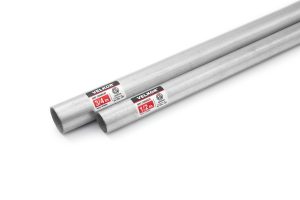 Electrical Metallic Tubing
Velkor manufactures Electrical Metallic Tubing (EMT) for commercial, industrial, and residential electrical installations. Every conduit is produced from premium low-carbon steel, delivering smooth bending performance, dimensional consistency, and dependable installation efficiency. Whether you need a cost-effective standard solution or maximum corrosion protection for demanding environments, Velkor offers the right zinc coating option for your project.
Electrical Metallic Tubing
Velkor manufactures Electrical Metallic Tubing (EMT) for commercial, industrial, and residential electrical installations. Every conduit is produced from premium low-carbon steel, delivering smooth bending performance, dimensional consistency, and dependable installation efficiency. Whether you need a cost-effective standard solution or maximum corrosion protection for demanding environments, Velkor offers the right zinc coating option for your project.
 EMT Connector – Set Screw Type – Zinc Die Cast
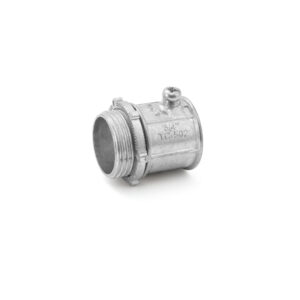
Velkor set-screw EMT connectors are die-cast from virgin zinc alloy rather than lower-grade recycled material. Maintaining a controlled alloy composition helps reduce brittleness and the risk of cracking, giving the fitting greater toughness during installation, handling and transport.
EMT Connector – Set Screw Type – Zinc Die Cast
Velkor set-screw EMT connectors are die-cast from virgin zinc alloy rather than lower-grade recycled material. Maintaining a controlled alloy composition helps reduce brittleness and the risk of cracking, giving the fitting greater toughness during installation, handling and transport.
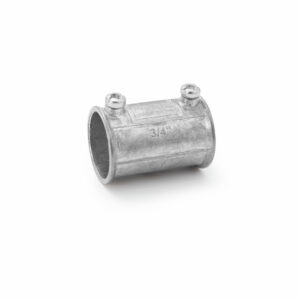 EMT Coupling – Set Screw Type – Zinc Die Cast
Velkor zinc die-cast set-screw EMT couplings join two lengths of EMT in a straight run. Each conduit end is secured independently by its own set screw, while the one-piece zinc alloy body supports consistent dimensions and straightforward installation.
EMT Coupling – Set Screw Type – Zinc Die Cast
Velkor zinc die-cast set-screw EMT couplings join two lengths of EMT in a straight run. Each conduit end is secured independently by its own set screw, while the one-piece zinc alloy body supports consistent dimensions and straightforward installation.
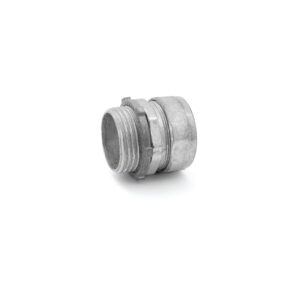 EMT Connector – Compression Type – Zinc Die Cast
This zinc die-cast compression connector terminates EMT conduit at an electrical box, cabinet, or enclosure. Its compression nut applies circumferential clamping around the conduit for controlled alignment, while the one-piece zinc alloy body offers dimensional consistency and a clean installation profile.
EMT Connector – Compression Type – Zinc Die Cast
This zinc die-cast compression connector terminates EMT conduit at an electrical box, cabinet, or enclosure. Its compression nut applies circumferential clamping around the conduit for controlled alignment, while the one-piece zinc alloy body offers dimensional consistency and a clean installation profile.
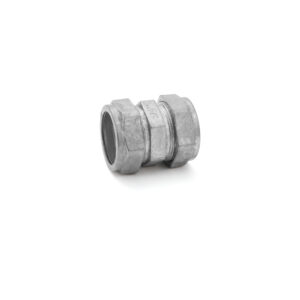 EMT Coupling – Compression Type – Zinc Die Cast
Velkor zinc die-cast compression EMT couplings join two lengths of EMT using independently tightened compression nuts. The compression mechanism grips around each conduit end to support alignment without exposed set screws, while the zinc die-cast body provides a clean, compact profile.
EMT Coupling – Compression Type – Zinc Die Cast
Velkor zinc die-cast compression EMT couplings join two lengths of EMT using independently tightened compression nuts. The compression mechanism grips around each conduit end to support alignment without exposed set screws, while the zinc die-cast body provides a clean, compact profile.
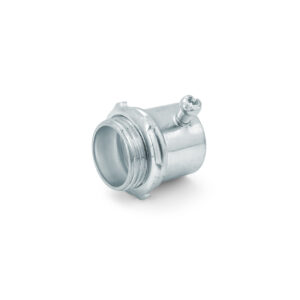 EMT Connector – Set Screw Type – Steel
Designed to connect EMT conduit securely to electrical boxes and enclosures through knockout openings. Manufactured from durable steel with a zinc-plated finish for corrosion protection. The set-screw design allows quick installation and provides a secure connection in dry locations.
EMT Connector – Set Screw Type – Steel
Designed to connect EMT conduit securely to electrical boxes and enclosures through knockout openings. Manufactured from durable steel with a zinc-plated finish for corrosion protection. The set-screw design allows quick installation and provides a secure connection in dry locations.
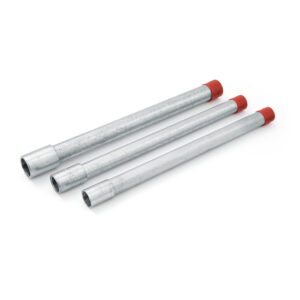 Intermediate Metal Conduit
Velkor Intermediate Metal Conduit (IMC) provides greater wall strength and mechanical protection than EMT while remaining lighter than conventional rigid metal conduit. Three product configurations allow buyers to select the appropriate wall thickness, zinc coating and standard compliance for their market, project and budget.
Rigid Metal Conduit – Hot-Dip Galvanized Steel
Velkor Rigid Metal Conduit is a heavy-wall steel raceway for installations that require greater mechanical protection than lighter metallic conduit systems. Each cataloged 3050 mm length is threaded for use with a rigid conduit coupling and supplied-end protection should be confirmed with the order specification.
Intermediate Metal Conduit
Velkor Intermediate Metal Conduit (IMC) provides greater wall strength and mechanical protection than EMT while remaining lighter than conventional rigid metal conduit. Three product configurations allow buyers to select the appropriate wall thickness, zinc coating and standard compliance for their market, project and budget.
Rigid Metal Conduit – Hot-Dip Galvanized Steel
Velkor Rigid Metal Conduit is a heavy-wall steel raceway for installations that require greater mechanical protection than lighter metallic conduit systems. Each cataloged 3050 mm length is threaded for use with a rigid conduit coupling and supplied-end protection should be confirmed with the order specification.
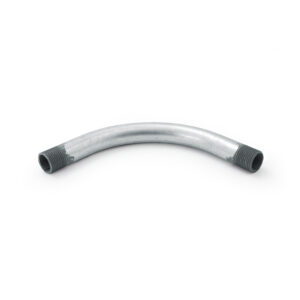 RIGID 90 Degree Radius Elbow – Galvanized Steel
Velkor RIGID 90 degree radius elbows redirect threaded RIGID or IMC conduit runs through a right-angle bend. The galvanized steel body provides a formed metal pathway for changing direction within the threaded raceway system.
RIGID 90 Degree Radius Elbow – Galvanized Steel
Velkor RIGID 90 degree radius elbows redirect threaded RIGID or IMC conduit runs through a right-angle bend. The galvanized steel body provides a formed metal pathway for changing direction within the threaded raceway system.
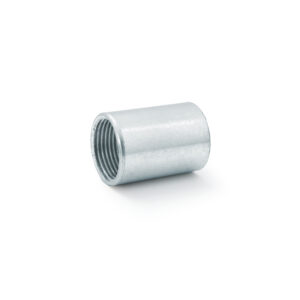 RIGID Coupling – Tubular Threaded – Galvanized Steel
Velkor tubular threaded RIGID couplings join two threaded RMC or IMC lengths to maintain raceway continuity. The galvanized steel body provides a direct threaded connection.
RIGID Coupling – Tubular Threaded – Galvanized Steel
Velkor tubular threaded RIGID couplings join two threaded RMC or IMC lengths to maintain raceway continuity. The galvanized steel body provides a direct threaded connection.
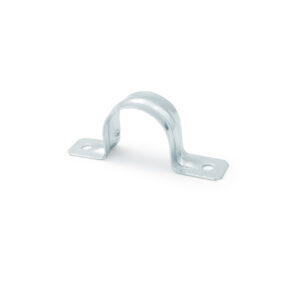 RIGID Strap – Two Hole – Galvanized Steel
Velkor two-hole RIGID straps support RIGID or IMC conduit against a mounting surface. A fastening point on each side of the conduit gives installers a balanced two-point attachment across the strap.
RIGID Strap – Two Hole – Galvanized Steel
Velkor two-hole RIGID straps support RIGID or IMC conduit against a mounting surface. A fastening point on each side of the conduit gives installers a balanced two-point attachment across the strap.
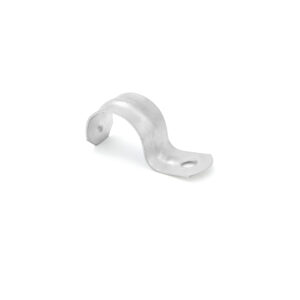 Rigid One-Hole Strap – Galvanized Steel
Velkor rigid one-hole straps secure RMC or IMC to a mounting surface with one fastening point. The compact galvanized-steel profile is useful where installers need direct surface support without the wider footprint of a two-hole strap.
Rigid One-Hole Strap – Galvanized Steel
Velkor rigid one-hole straps secure RMC or IMC to a mounting surface with one fastening point. The compact galvanized-steel profile is useful where installers need direct surface support without the wider footprint of a two-hole strap.
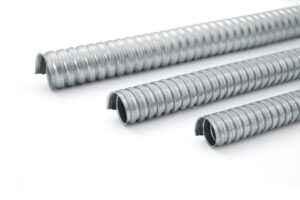 Flexible Metal Conduit – Greenfield
Velkor Greenfield Flexible Metal Conduit provides flexible and reliable cable routing around equipment, machinery, and tight installation spaces. Its galvanized steel construction forms a continuous flexible raceway, making it suitable for applications where rigid conduit is difficult to route or install. Greenfield flexible conduit is also commonly referred to as American Standard Steel Flexible Conduit. If you are looking for a square-locked construction with greater flexibility, please visit our Square-Locked Flexible Conduit (Ultra Flex) page.
Flexible Metal Conduit – Greenfield
Velkor Greenfield Flexible Metal Conduit provides flexible and reliable cable routing around equipment, machinery, and tight installation spaces. Its galvanized steel construction forms a continuous flexible raceway, making it suitable for applications where rigid conduit is difficult to route or install. Greenfield flexible conduit is also commonly referred to as American Standard Steel Flexible Conduit. If you are looking for a square-locked construction with greater flexibility, please visit our Square-Locked Flexible Conduit (Ultra Flex) page.
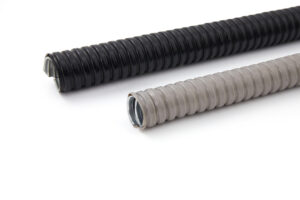 PVC-Coated Flexible Metal Conduit – Square Lock
Velkor PVC-coated flexible metal conduit combines a square-lock metallic core with an external PVC covering for flexible cable routing and added surface protection. Its covered construction provides a practical option where a flexible metal raceway with a smoother outer surface is preferred.
PVC-Coated Flexible Metal Conduit – Square Lock
Velkor PVC-coated flexible metal conduit combines a square-lock metallic core with an external PVC covering for flexible cable routing and added surface protection. Its covered construction provides a practical option where a flexible metal raceway with a smoother outer surface is preferred.
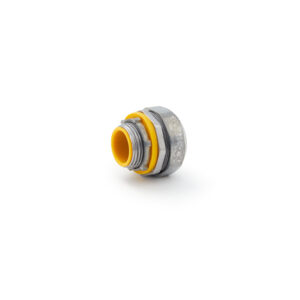 Liquid-Tight Straight Connector – Zinc Die Cast
Velkor liquid-tight straight connectors terminate flexible conduit at a box cabinet or enclosure in a direct-line arrangement. The zinc die-cast body provides a compact fitting profile while the straight entry supports orderly routing where no direction change is needed.
Liquid-Tight Straight Connector – Zinc Die Cast
Velkor liquid-tight straight connectors terminate flexible conduit at a box cabinet or enclosure in a direct-line arrangement. The zinc die-cast body provides a compact fitting profile while the straight entry supports orderly routing where no direction change is needed.
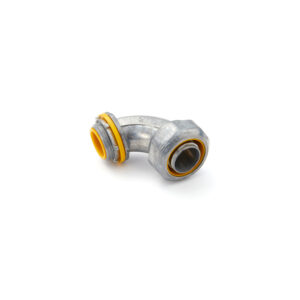 Liquid-Tight 90° Connector – Zinc Die Cast
Velkor liquid-tight 90° connectors provide a right-angle transition from flexible conduit into a box, cabinet, or enclosure. The zinc die-cast body helps manage routing where straight entry is restricted and a compact change of direction is required.
Liquid-Tight 90° Connector – Zinc Die Cast
Velkor liquid-tight 90° connectors provide a right-angle transition from flexible conduit into a box, cabinet, or enclosure. The zinc die-cast body helps manage routing where straight entry is restricted and a compact change of direction is required.
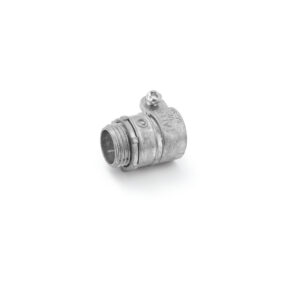 BX/FMC Straight Squeeze Connector – Zinc Die Cast
Velkor BX/FMC straight squeeze connectors join flexible metal conduit to an enclosure through a direct entry. The squeeze-style connection secures the conduit while the zinc die-cast body provides a compact fitting for straightforward routing layouts.
BX/FMC Straight Squeeze Connector – Zinc Die Cast
Velkor BX/FMC straight squeeze connectors join flexible metal conduit to an enclosure through a direct entry. The squeeze-style connection secures the conduit while the zinc die-cast body provides a compact fitting for straightforward routing layouts.
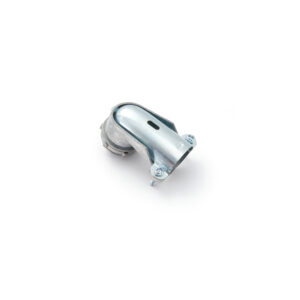 BX/FMC 90° Squeeze Connector – Zinc Die Cast
Velkor BX/FMC 90° squeeze connectors provide a right-angle entry from flexible metal conduit into a box or enclosure. The squeeze connection supports secure conduit engagement while the zinc die-cast elbow helps organize installations with limited straight-line clearance.
BX/FMC 90° Squeeze Connector – Zinc Die Cast
Velkor BX/FMC 90° squeeze connectors provide a right-angle entry from flexible metal conduit into a box or enclosure. The squeeze connection supports secure conduit engagement while the zinc die-cast elbow helps organize installations with limited straight-line clearance.
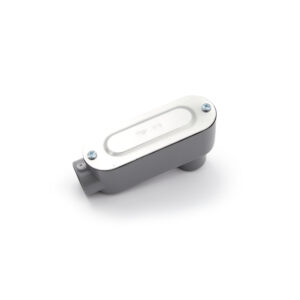 RIGID Threaded Conduit Bodies
Velkor RIGID threaded conduit bodies provide accessible direction changes and pull points in threaded rigid conduit runs. Available in C, LB, LL, LR, and T configurations, each body is supplied with a cover and gasket.
RIGID Threaded Conduit Bodies
Velkor RIGID threaded conduit bodies provide accessible direction changes and pull points in threaded rigid conduit runs. Available in C, LB, LL, LR, and T configurations, each body is supplied with a cover and gasket.
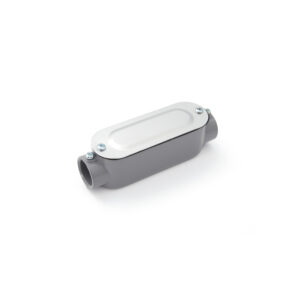 EMT Set-Screw Conduit Bodies
Velkor EMT set-screw conduit bodies provide accessible direction changes and pull points in electrical metallic tubing runs. Available in C, LB, LL, LR, and T configurations, each body is supplied with a cover and gasket.
EMT Set-Screw Conduit Bodies
Velkor EMT set-screw conduit bodies provide accessible direction changes and pull points in electrical metallic tubing runs. Available in C, LB, LL, LR, and T configurations, each body is supplied with a cover and gasket.
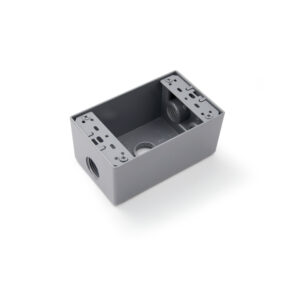 Single-Gang Weatherproof Boxes
Velkor single-gang weatherproof boxes provide cast aluminum wiring space for surface-mounted devices and conduit terminations. Hole-pattern variants are organized by opening arrangement, including side-opening models identified by an X suffix.
Single-Gang Weatherproof Boxes
Velkor single-gang weatherproof boxes provide cast aluminum wiring space for surface-mounted devices and conduit terminations. Hole-pattern variants are organized by opening arrangement, including side-opening models identified by an X suffix.
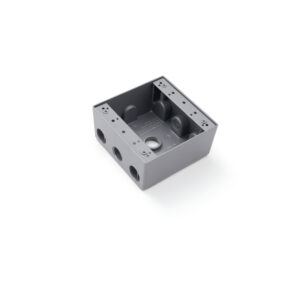 Double Gang Weatherproof Boxes
Velkor double gang weatherproof boxes provide cast aluminum wiring space for multi-device surface installations and conduit entry arrangements. The grouped catalog structure separates standard and side-opening hole patterns, with X suffixes reserved for side-opening models.
Double Gang Weatherproof Boxes
Velkor double gang weatherproof boxes provide cast aluminum wiring space for multi-device surface installations and conduit entry arrangements. The grouped catalog structure separates standard and side-opening hole patterns, with X suffixes reserved for side-opening models.
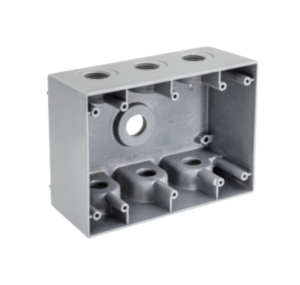 Triple-Gang Weatherproof Boxes
Velkor Triple-Gang Weatherproof Boxes provide three device positions in a 2-inch-deep aluminum body.
Triple-Gang Weatherproof Boxes
Velkor Triple-Gang Weatherproof Boxes provide three device positions in a 2-inch-deep aluminum body.
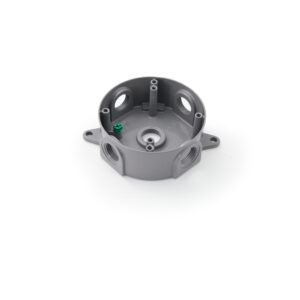 4-Inch Round Weatherproof Boxes
Velkor 4-Inch Round Weatherproof Boxes provide a round wiring enclosure with four side entries and one bottom entry.
4-Inch Round Weatherproof Boxes
Velkor 4-Inch Round Weatherproof Boxes provide a round wiring enclosure with four side entries and one bottom entry.
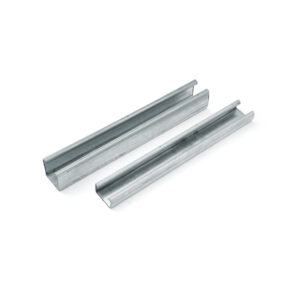 41 × 41 mm Strut Channel – Plain and Slotted
Velkor 41 × 41 mm strut channel is available in plain and slotted 3-meter configurations. A standard 2.5 mm thickness supports general framing and support-system selection, while alternative thicknesses and four finish codes are available for project-specific ordering.
41 × 41 mm Strut Channel – Plain and Slotted
Velkor 41 × 41 mm strut channel is available in plain and slotted 3-meter configurations. A standard 2.5 mm thickness supports general framing and support-system selection, while alternative thicknesses and four finish codes are available for project-specific ordering.
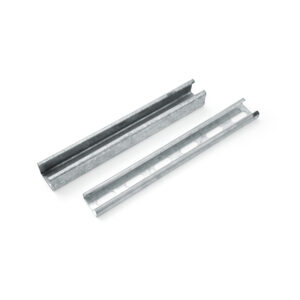 41 × 21 mm Strut Channel – Plain and Slotted
Velkor 41 × 21 mm strut channel is available in plain and slotted 3-meter configurations. The lower-profile section uses a standard 2.5 mm thickness, while other thicknesses and four finish options are available for project-specific ordering.
41 × 21 mm Strut Channel – Plain and Slotted
Velkor 41 × 21 mm strut channel is available in plain and slotted 3-meter configurations. The lower-profile section uses a standard 2.5 mm thickness, while other thicknesses and four finish options are available for project-specific ordering.
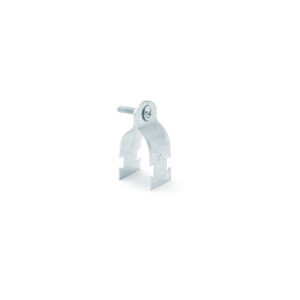 Strut Clamps
Velkor strut clamps cover catalog series VK2101–VK2110 and trade sizes from 1/2 in through 4 in. The range is organized under the Strut Channel System; model-to-size mapping and product-specific construction details require confirmation before publication or ordering.
Strut Clamps
Velkor strut clamps cover catalog series VK2101–VK2110 and trade sizes from 1/2 in through 4 in. The range is organized under the Strut Channel System; model-to-size mapping and product-specific construction details require confirmation before publication or ordering.
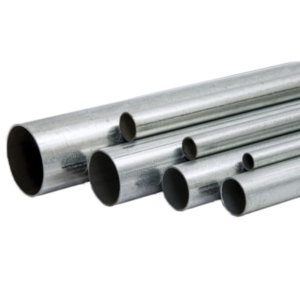 Metric EMT Steel Conduit – Unthreaded
Velkor Metric EMT Steel Conduit is an unthreaded metallic raceway for routing and protecting electrical conductors. Six metric sizes are supplied in 3 m lengths, with confirmed outside-diameter limits, wall thickness, piece weight and bundle quantity shown for each catalog number.
Metric EMT Steel Conduit – Unthreaded
Velkor Metric EMT Steel Conduit is an unthreaded metallic raceway for routing and protecting electrical conductors. Six metric sizes are supplied in 3 m lengths, with confirmed outside-diameter limits, wall thickness, piece weight and bundle quantity shown for each catalog number.
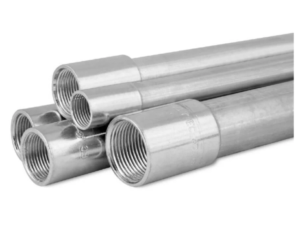 Metric RMC Steel Conduit – Hot-Dip Galvanized
Velkor Metric RMC Steel Conduit is a heavier-wall metallic raceway with threaded ends for compatible rigid-conduit connections. The supplied table covers 20–110 mm sizes in 3 m lengths and records diameter limits, wall thickness, piece weight and package quantity for each model.
Metric EMT Connector – Set-Screw Type – Zinc
Velkor Zinc Set-Screw EMT Connectors terminate unthreaded metric conduit at junction boxes, cabinets and panels. The conduit-side screw secures the tube, while the threaded enclosure end forms the box entry. Sizes run from 16 to 110 mm. Complies with IEC 61386-1 and IEC 61386-21.
Metric EMT Coupling – Set-Screw Type – Zinc
Velkor Zinc Set-Screw EMT Couplings join two matching conduit lengths in a straight run. Separate screws secure the tube ends, providing accessible fastening points on both sides of the joint. The range covers 16–110 mm metric EMT. Complies with IEC 61386-1 and IEC 61386-21.
Metric RMC Steel Conduit – Hot-Dip Galvanized
Velkor Metric RMC Steel Conduit is a heavier-wall metallic raceway with threaded ends for compatible rigid-conduit connections. The supplied table covers 20–110 mm sizes in 3 m lengths and records diameter limits, wall thickness, piece weight and package quantity for each model.
Metric EMT Connector – Set-Screw Type – Zinc
Velkor Zinc Set-Screw EMT Connectors terminate unthreaded metric conduit at junction boxes, cabinets and panels. The conduit-side screw secures the tube, while the threaded enclosure end forms the box entry. Sizes run from 16 to 110 mm. Complies with IEC 61386-1 and IEC 61386-21.
Metric EMT Coupling – Set-Screw Type – Zinc
Velkor Zinc Set-Screw EMT Couplings join two matching conduit lengths in a straight run. Separate screws secure the tube ends, providing accessible fastening points on both sides of the joint. The range covers 16–110 mm metric EMT. Complies with IEC 61386-1 and IEC 61386-21.
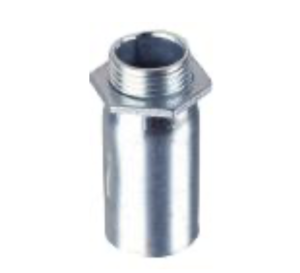 Metric EMT Connector – Autofijación Type – Steel
Velkor Autofijación Steel EMT Connectors provide the transition from matching metric conduit to a box or cabinet. Five sizes cover 20, 25, 32, 40 and 50 mm conduit for installations specifying the Autofijación fitting format. Complies with IEC 61386-1 and IEC 61386-21.
Metric EMT Connector – Autofijación Type – Steel
Velkor Autofijación Steel EMT Connectors provide the transition from matching metric conduit to a box or cabinet. Five sizes cover 20, 25, 32, 40 and 50 mm conduit for installations specifying the Autofijación fitting format. Complies with IEC 61386-1 and IEC 61386-21.
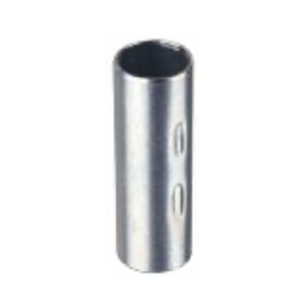 Metric EMT Coupling – Autofijación Type – Steel
Velkor Autofijación Steel EMT Couplings connect two matching conduit lengths in a straight route. The series covers 20–50 mm metric EMT and is intended for layouts specifying Autofijación fittings. Complies with IEC 61386-1 and IEC 61386-21.
Metric EMT Coupling – Autofijación Type – Steel
Velkor Autofijación Steel EMT Couplings connect two matching conduit lengths in a straight route. The series covers 20–50 mm metric EMT and is intended for layouts specifying Autofijación fittings. Complies with IEC 61386-1 and IEC 61386-21.