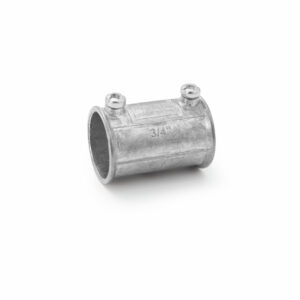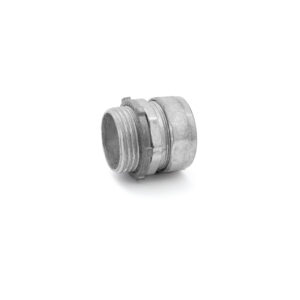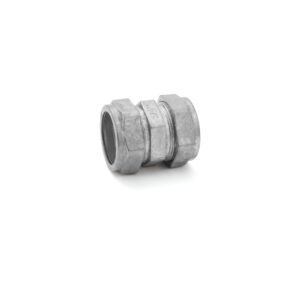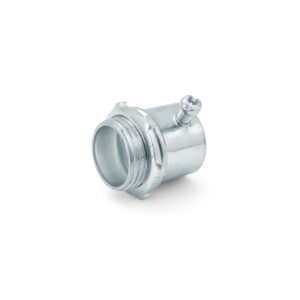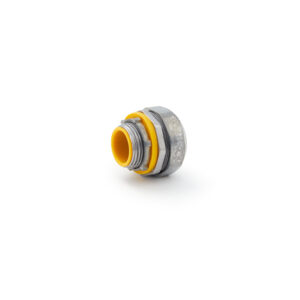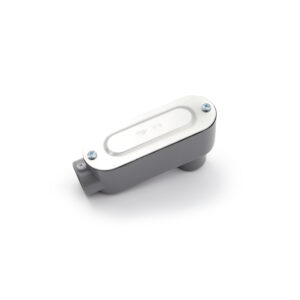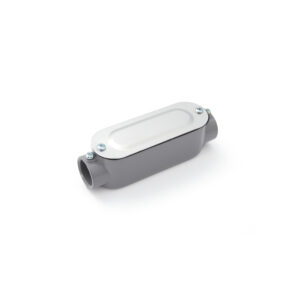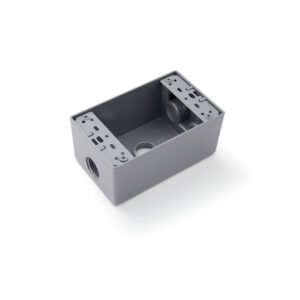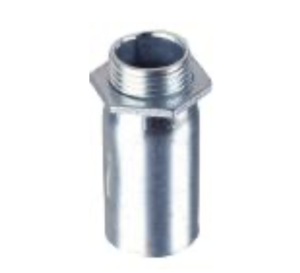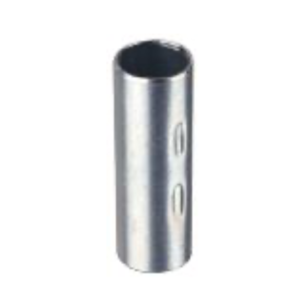

Some steel EMT fittings secure the tubing with screws. Others use a nut and compression ring. Which should a buyer choose?
Start with the installation environment and project requirements, then compare connection methods. Set-screw and compression fittings are not simply lower- and higher-grade options. A standard compression fitting is not automatically raintight. When comparing quotations, check the construction and dimensions—not just the trade size and unit price.
How the two connections work
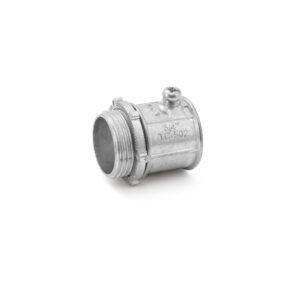
A set-screw fitting secures EMT by tightening a screw against the tubing wall. A compression fitting uses a nut to tighten a ring around the tubing.
Both types are available in steel. This article keeps the material the same and focuses on the connection method. Steel, aluminum and zinc-alloy fittings deserve a separate comparison.
Swipe or scroll horizontally to compare all three columns.
| What to compare | Set-screw | Compression |
|---|---|---|
| How it holds the tubing | Screws press against the tubing wall | A nut tightens a ring around the tubing |
| Where the installer needs tool access | Screw heads | Compression nut |
| Components to check | Screws and their mating threads | Nut, ring and mating surfaces |
| Suitability for the environment | Check the specific model and installation conditions | Check the specific model; “compression” alone does not mean raintight |
A different connection method does not make one type more reliable in every situation. Correct seating and tightening matter for both. Under-tightening and over-tightening can affect performance. Follow the installation instructions for the specific fitting.[1]
Check the environment before choosing compression
For dry locations where the project permits them, suitable products are available in both connection styles. Buyers can then compare construction, tool access and purchasing cost.
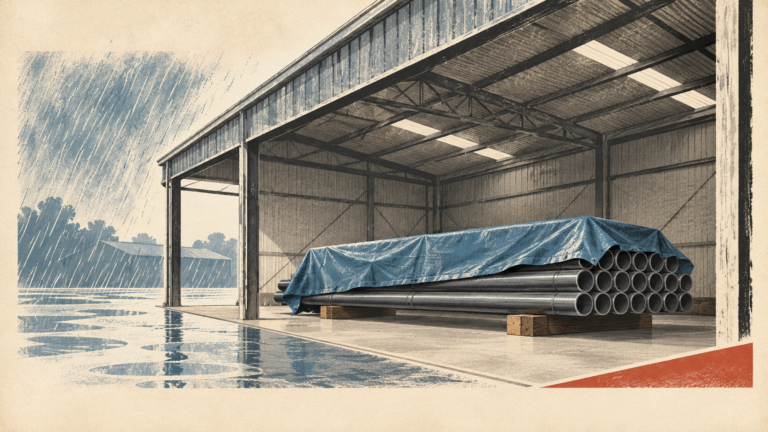
Where rain or wet-location exposure is involved, first select a model specifically identified for that use.
Compression describes a connection method, not an environmental rating. Standard compression fittings for dry locations and dedicated raintight versions are both available. Their appearance or general product name is not enough to make them interchangeable.[2][3]
An order that says only “steel EMT compression connector” therefore leaves an important question unanswered. If raintight performance is required, state it explicitly and check the documentation and certification scope for the selected model.
Concrete-tight does not automatically mean raintight, either. A product described as concrete-tight may still be intended for dry locations. For concrete embedment, also check whether the model requires taping or other specified installation conditions.[2][4]
A lower price may also mean a shorter fitting
In our sourcing experience, a lower-priced fitting may use a shorter body to reduce material consumption. Two quotations can show the same trade size and material without describing exactly the same product.
Compare drawings or samples alongside the prices. Check the overall length, tubing insertion dimensions, box-side thread length and included accessories.
A shorter fitting is not automatically noncompliant. A longer one is not proof of better quality. First establish which section differs and whether the product meets the agreed dimensions, assembly requirements and performance requirements.
Do not judge different connection designs by overall length alone. When comparing set-screw with compression, first confirm that both proposed products meet the intended use. When comparing quotations for the same design, then examine the dimensional differences.
Check the box connection, too
For a connector joining EMT to an electrical box, checking the tubing grip is only part of the job. The box-side connection also needs attention.
With a thicker box wall, check that the usable thread length is sufficient for assembly. A design intended for a thicker enclosure may be needed. Where a raintight seal is required, confirm the box-side gasket and installation method as well as the tubing-side connection.[3][5]
This is why enclosure details can be useful in an enquiry. The EMT trade size alone does not describe every condition at the box entry.
Put the important details in the enquiry
To help a supplier quote the right product, include these details in your enquiry:
- EMT trade size, and whether you need a connector for a box entry or a coupling to join two tubing lengths.
- Steel construction, required finish, and set-screw or compression connection.
- Dry, wet or concrete-embedded use, along with the project's certification requirements.
- Whether an insulated throat is required. For an unusual enclosure, include the entry and wall-thickness details.
- An approved drawing or sample, plus quantities, packaging and required accessories.
First establish whether the fitting suits the application. Then establish whether the quotations describe comparable products. That makes the choice between set-screw and compression a purchasing decision based on actual requirements, rather than a name and a unit price.
References
Sources accessed October 22, 2026. Manufacturer specifications and certifications apply to the respective product models.