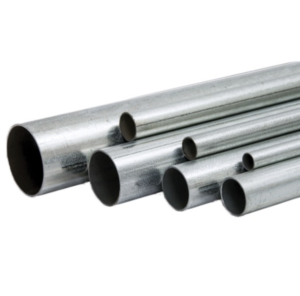
You open a bundle of EMT conduit and notice small white spots on the tubes. The immediate questions are understandable: has the conduit rusted, and can it still be used?
White deposits on galvanized EMT after exposure to moisture may be white rust: corrosion of the zinc coating, which is different from red rust on the steel beneath it. They should not automatically be dismissed as cosmetic. Check the extent of the deposits, the condition of the coating and the moisture exposure before deciding how to handle the material.
Why do white spots appear on EMT conduit?
The whitening we have seen appears as small, scattered white spots on the tube surface. When investigating this kind of change, moisture is one of the first things worth checking.
White rust on galvanized surfaces commonly appears as a white or gray powdery deposit, often called wet storage stain. When moisture remains between closely stacked tubes and airflow is limited, the zinc surface can corrode and form these deposits. The American Galvanizers Association explains this process in its wet storage stain guidance.
Check not only whether the conduit has been wet, but whether the moisture stayed on it and whether it could dry afterward. Not every contact with water produces white spots. White marks can also be other residues, so the material itself still needs to be inspected.
How should EMT be stored in a humid warehouse?
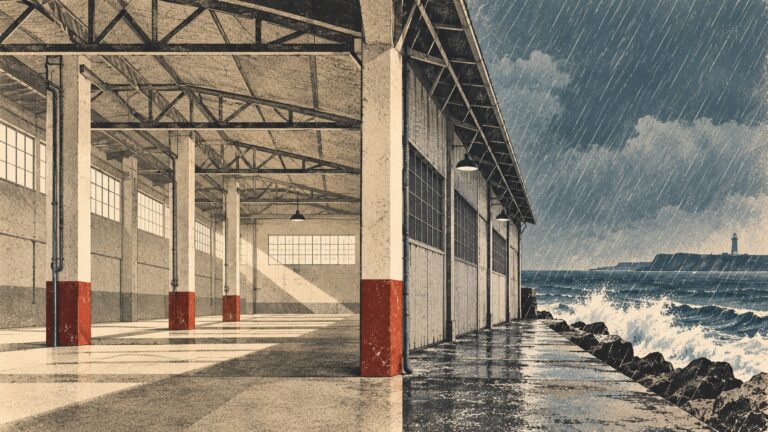
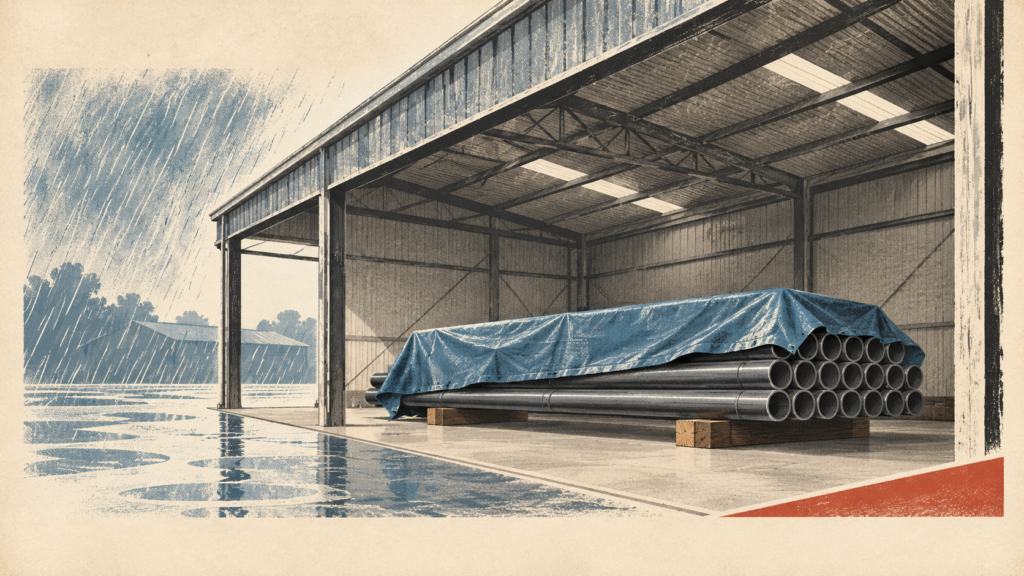
Our factory is in southern China. In our own warehouse experience, damp floors need particular attention during the rainy season, when the floor can become visibly wet. Placing conduit directly on it exposes the material to both dirt and moisture.
We use wooden supports to keep the conduit off the floor, then protect it with blue or white tarpaulins. Customers operating warehouses in humid regions can apply the same basic storage approach.
If your region has high humidity, a long rainy season or a warehouse floor that often becomes damp, place incoming EMT in a dry, sheltered, well-ventilated area. Use suitably rated storage racks or stable wooden supports to keep the conduit and its wrapping away from the wet floor.
Wooden supports should be dry, clean and suitable for contact with galvanized surfaces. Wet timber is a poor choice for separating conduit from moisture. Leave room for air circulation and drainage, and avoid keeping the material tightly stacked where moisture remains trapped.
During rainy periods, or whenever the floor becomes damp, pay particular attention to the bottom tubes, the supports and the inside of the wrapping. A dry top layer does not tell you what is happening underneath.
Use tarpaulins to keep water out without trapping moisture
We pay attention to tears in the tarpaulin, incomplete coverage and openings where water could enter. These are useful checks in a customer’s warehouse too, but a well-covered bundle is not necessarily dry inside.
If wet conduit is wrapped again, or condensation forms beneath the cover, moisture can remain trapped. Check that the conduit and supports are dry before covering them. If they are already wet, allow water to drain and the surfaces to dry under shelter before restoring the protection. Simply putting the tarpaulin back does not remove the moisture already inside.
How can you assess the effect of white rust?
White rust and red rust need to be considered separately. The former involves the zinc coating; the latter generally involves corrosion of the steel. White spots alone do not justify rejecting an entire shipment, but the absence of red rust does not establish that everything is acceptable either.
Look at how widely the deposits are spread, how heavy they are and the condition of the coating underneath. Severe wet storage corrosion can consume the protective zinc layer, making it necessary to check the remaining coating thickness in affected areas. This is one of the assessment methods described in the American Galvanizers Association’s storage and wet storage stain guidance.
For a particular EMT shipment, acceptance and treatment decisions should reflect the product’s surface coating, the purchase requirements and the inspection findings. Being able to wipe a mark off is not, by itself, proof that the material meets those requirements. For more background on the protective layer, see our guide to zinc coating thickness on steel conduit.
Three steps to take if EMT arrives with white spots
First, record the condition on arrival. Photograph the complete bundle, damaged wrapping or water marks, close-ups of the deposits and the batch identification. Record when the issue was noticed and how much material is affected. Photographs taken before cleaning make it easier for both parties to understand the delivery condition.
Second, prevent further moisture exposure. Move the material to a sheltered, dry, ventilated area and keep it off the floor on stable supports. Check wet wrapping and standing water where it is safe to do so. Do not tightly rewrap conduit that is still wet.
Third, review the condition with the supplier. Explain whether there are scattered spots or extensive deposits, whether reddish-brown rust is also visible, and whether the conduit or packaging is still damp. Cleaning or repair methods need to suit the actual coating. Heavy deposits or visible corrosion should be inspected before treatment and acceptance decisions are made. For a Velkor shipment, contact us with the batch details and photographs so we can review the condition with you.
At our factory, wooden supports and tarpaulins help reduce moisture exposure during storage. That care needs to continue in the customer’s warehouse. Checking the wrapping and tube surfaces on arrival, watching the lower layers and floor during storage, and responding promptly to moisture can help identify a problem before the next bundle is opened.