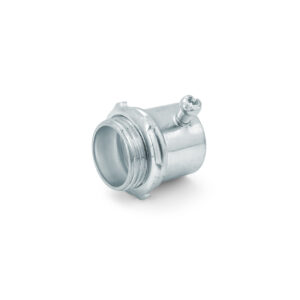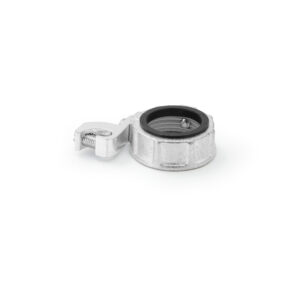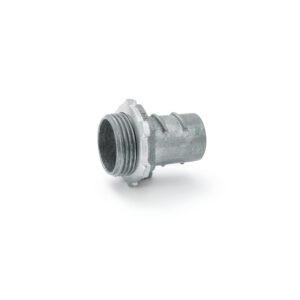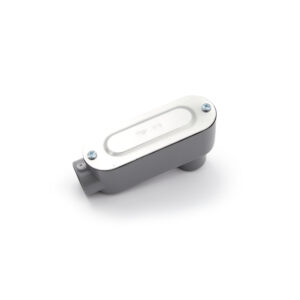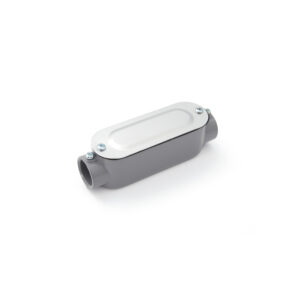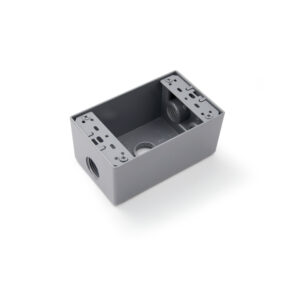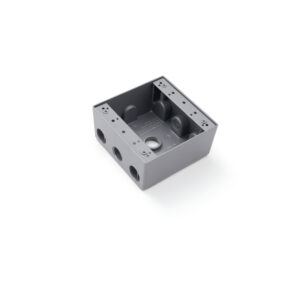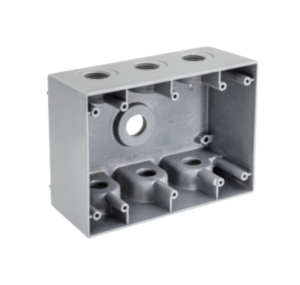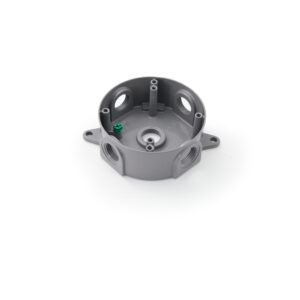

Conduit bodies are available in different materials and finishes. This guide focuses on Velkor’s powder-coated die-cast aluminum bodies, covering the five common configurations, connection choices and cover options.
An order that says “3/4-inch conduit body” still leaves two important questions unanswered: which way does the conduit run, and where will the cover face? Getting the size right does not resolve either one.
Choose C for straight-through access, T for a three-way route, and LB, LL or LR for a 90-degree change with the appropriate outlet position. Then match the connection to the conduit and keep the cover accessible. The type letters describe the layout; they do not establish the product’s sealing rating or suitability for wire splices.
Read the shape from the cover side
A conduit body provides access to the inside of a conduit run through a removable cover. Its conduit openings—also called hubs—determine the route; the cover gives access for pulling, inspection and maintenance.
For LL and LR, use a consistent reference: face the access cover and hold the body with the end hub, which follows its long axis, pointing up. The side hub then points left on an LL and right on an LR. This is an identification position, not a required installation orientation. A rotated catalog photograph can make “left” and “right” look different.
| Type | Hub arrangement | When to choose it |
|---|---|---|
| LB | One end hub and one rear hub, opposite the cover | A 90-degree route through the back of the body, while retaining access from the cover side |
| LL | One end hub and one left-side hub in the reference position above | A 90-degree turn to the left with the cover facing you |
| LR | One end hub and one right-side hub in the reference position above | A 90-degree turn to the right with the cover facing you |
| C | Two opposite end hubs in line | Access along a straight conduit run |
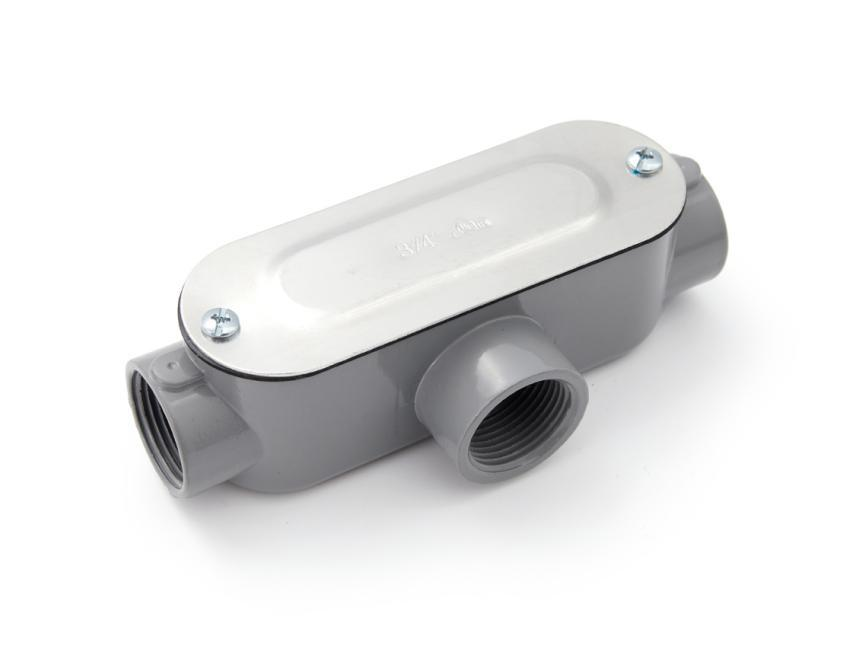
| T | Two opposite end hubs plus a side hub | A three-way conduit route |
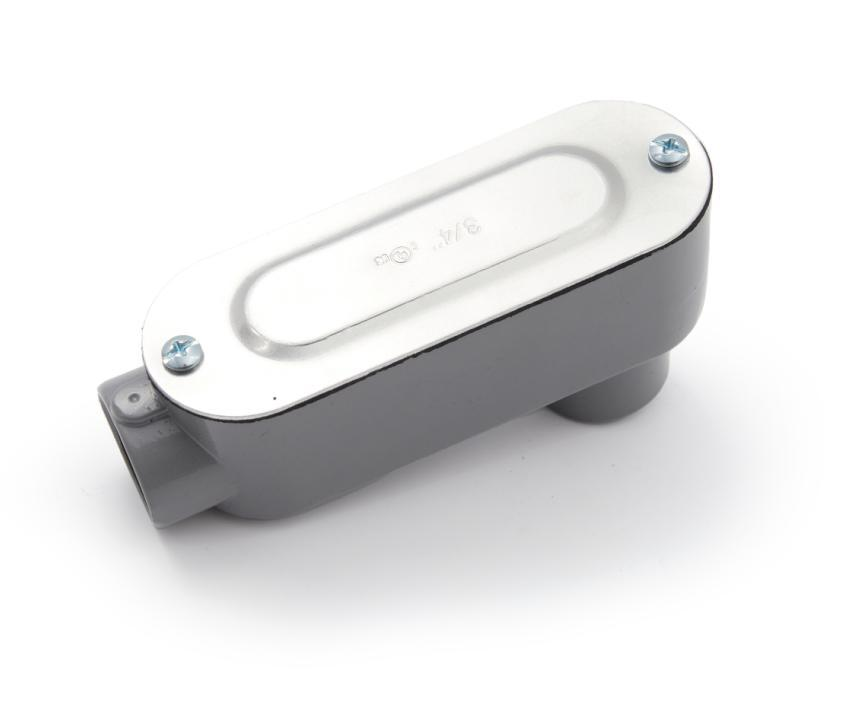
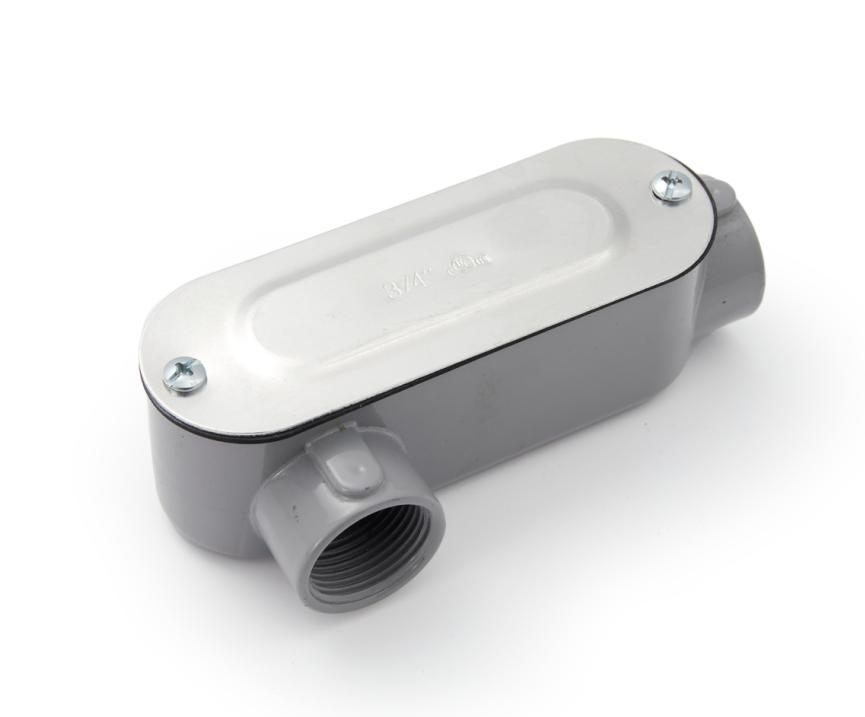
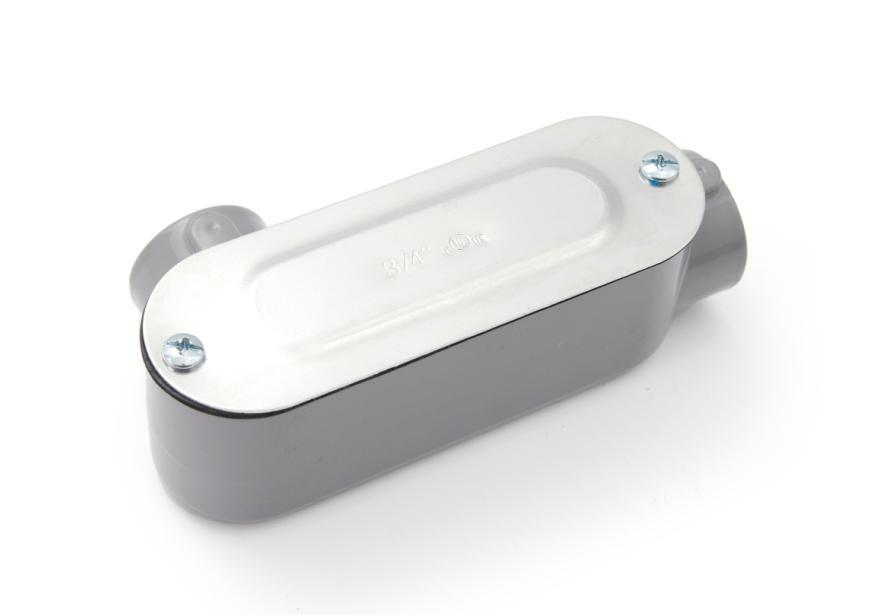
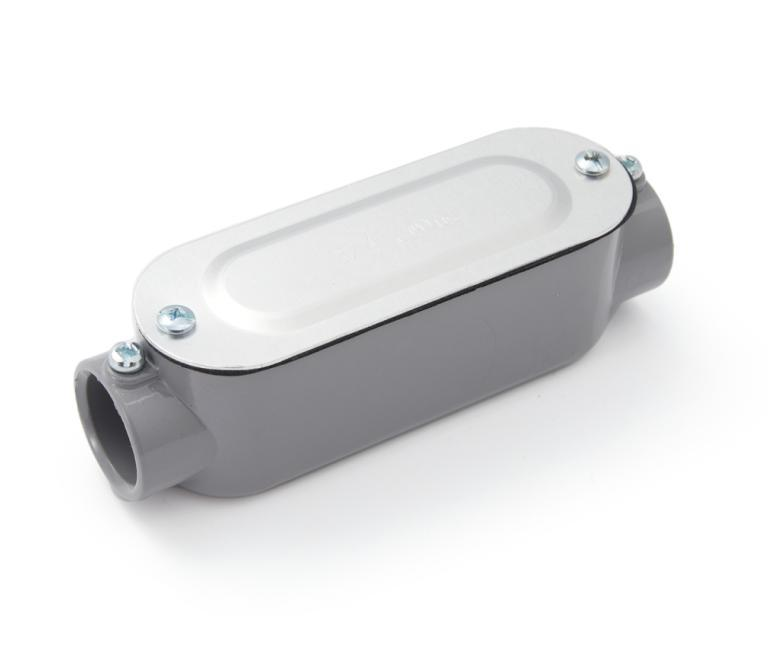
Catalog views of the five configurations. Viewing angles vary; confirm outlet orientation from the product drawing before ordering.
A T body provides a third conduit connection. It does not, by its shape alone, authorize a wire splice inside.
Choose the route and cover position together
Imagine a conduit run that needs to turn behind the body, with the cover facing an accessible space. That layout points toward an LB. If the turn needs to stay to one side of the cover, compare LL and LR instead.
Before settling on the type, picture the completed installation: can someone reach the screws, remove the cover and work through the opening? A body that connects the two conduits but leaves its cover blocked by a wall or adjacent equipment is a poor selection. Use the layout drawing or a clearly oriented photograph to settle the direction before ordering.
Match the connection as well as the letters
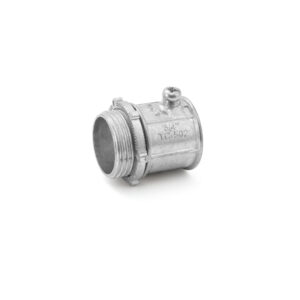
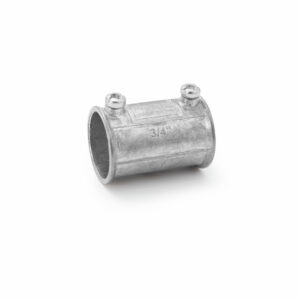
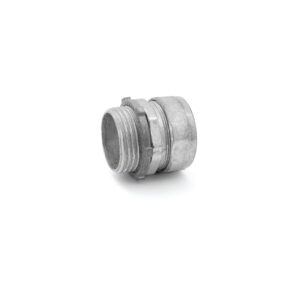
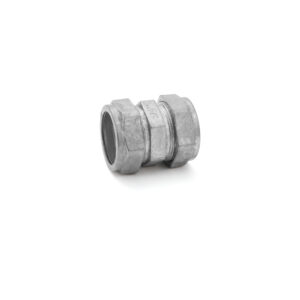
“LB” identifies a shape, not a connection method. A threaded body connects to compatible threaded rigid or IMC conduit; an EMT set-screw body secures the tubing with set screws. Some manufacturers also offer combination bodies, so check the exact model rather than judging from the letter code.
Velkor offers separate Threaded Rigid and EMT Set-Screw families. Specify the conduit system, trade size and body type together. Where a threaded connection is required, agree the thread specification too; matching the nominal size alone is not a complete compatibility check.
Order the cover and gasket as part of the selection
For these two Velkor families, the bodies are powder-coated die-cast aluminum. Our usual cover options are powder-coated steel and plain, uncoated aluminum. Gaskets are included. We do not normally supply bare steel covers for these ranges because of the risk of rust in outdoor exposure.
The powder coating provides a protective barrier for the steel; it is not a permanent guarantee against rust. Aluminum does not form iron rust and naturally develops a protective oxide layer, but it can still corrode—for example, in humid, salty conditions. State the preferred cover material and exposure conditions when requesting a quotation.
For an exposed installation, check the documented suitability of the exact body, cover, gasket and connection arrangement. If splices are planned, verify the product’s suitability, marked volume and applicable fill requirements with the installer; do not treat every conduit body as a junction box.
A useful inquiry can be short: “3/4-inch LB conduit body for EMT, set-screw connection, plain aluminum cover, gasket included.” Add the quantity and required installation conditions. If direction is uncertain, attach a sketch showing both conduit paths and the side from which the cover must remain accessible.
References
- Eaton: Condulet Series 5 conduit bodies and manufacturer catalog, pages 1–4: configuration and connection examples. Ratings shown there apply to Eaton’s specified products.
- IAEI: Conduit Bodies and Their Use in Accordance With the NEC, January 2006: technical background on configurations, covers and use limitations. This historical explanation is not a substitute for the code edition adopted for a project.
Sources reviewed October 15, 2026. Velkor material and accessory details refer specifically to the two linked Velkor product families.